
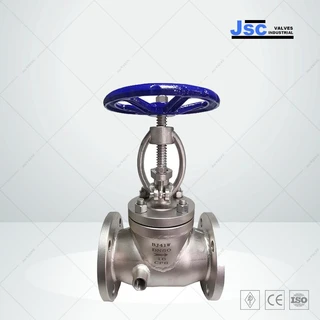
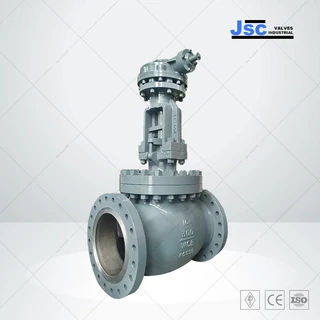
Steam Jacketed Globe Valve, ANSI B16.34, BS 1873, 150-2500 LB
Key Specifications / Features
Detail Information
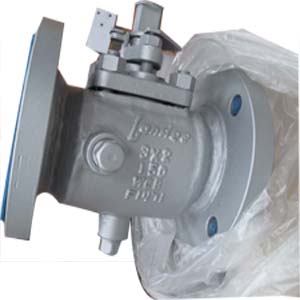
Our steam jacketed valve is designed for transporting high-viscosity media that solidify at normal temperatures. Used in petroleum, chemical, metallurgical, pharmaceutical, and other industries, it features an insulation jacket welded between the valve flanges. The valve includes two connection ports for the thermal insulation jacket on the sides and bottom. This valve is particularly suited for chemical and chemical fertilizer pipelines, offering reliability in various industrial applications.
Steam Jacketed Globe Valve-Structure Feature
The steam jacketed globe valve is a forced sealing valve designed to ensure a leak-proof seal when closed. It requires pressure to force the valve disc against the sealing surface to prevent leakage. When the medium enters the valve from below the disc, the operating force must overcome friction between the valve stem and packing, as well as the thrust from the medium's pressure. Consequently, the force needed to close the valve is greater than that required to open it, necessitating a larger valve stem to prevent bending faults.
Recent advancements include the self-sealing valve, which changes the medium flow direction to enter the valve chamber from above the disc. This design reduces the closing force needed due to medium pressure, but increases the opening force. This results in a reduced diameter for the valve stem and improved sealing under medium pressure.
Steam Jacketed Globe Valve-Design Standard
| Design and manufacture | Face to face | Flange | BW ends | pressure-Temperature | Test and inspection |
| ANSI B16.34/BS 1873 | ANSI B16.10 | ANSI B16.5 | ANSI B16.25 | ANSI B16.34 | API 598 |
Steam Jacketed Globe Valve-Testing Pressure
| Class(Lb) | Shell test | Seat test | Air test | |||
| MPa | Lbf/in2 | MPa | Lbf/in2 | MPa | Lbf/in2 | |
| 150 LB | 3.0 | 430 | 2.2 | 315 | 0.4-0.7 | 60-100 |
| 300 LB | 7.7 | 1110 | 5.7 | 815 | ||
| 600 LB | 15.3 | 2220 | 11.3 | 1630 | ||
| 900 LB | 23.0 | 3330 | 17.0 | 2445 | ||
| 1500 LB | 38.4 | 5560 | 28.2 | 4080 | ||
| 2500 LB | 64.0 | 9255 | 47.0 | 6790 | ||
Steam Jacketed Globe Valve-Main Parts
| Body &bonnet | Stem | sealing | Gasket | packing | Temperature | Applicable media |
| ASTM A216 WCB | 2Cr13 | 13Cr STL |
Graphite 13Cr/Graphite 1Cr13/Flexible SFB-2 ASTM A182 F304, F316, F304L, F316L |
Soft graphite Reinforced flexible graphite SFB/260 SFP/260 PTFE |
≤425 | Water Steam Oil |
| ASTM A217 WC1 | 38CrMoAl 25Cr2MoV | ≤425 | ||||
| ASTM A217 WC6 | ≤540 | |||||
| ASTM A217 WC9 | ≤570 | |||||
| ASTM A217 C5/ C12 | ≤540 | |||||
| ASTM A351 CF8 | ASTM A182 F304 | ≤200 | nitric acid acetic acid urea |
|||
| ASTM A351 CF8M | ASTM A182 F316 | |||||
| ASTM A351 CF3 | ASTM A182 F304L | |||||
| ASTM A351 CF3M | ASTM A182 F316L |
Send your message to this supplier
FAQs
What is a Non-Rising Stem Gate Valve?
A valve where the stem does not move vertically but rotates internally to raise or lower the gate. This design is ideal for installations with limited vertical space.
How Does a Non-Rising Stem Gate Valve Work?
The handwheel turns the stem, which in turn moves the gate up or down inside the valve body without changing the external height of the stem.
How Does a Rising Stem Gate Valve Work?
The handwheel lifts the stem and gate together, providing a visual indication of whether the valve is open or closed.
Which Valve Should I Choose?
Use a rising stem valve for above-ground applications where visibility and ease of maintenance are important.
Use a non-rising stem valve for underground or space-limited installations.
Conclusion
The choice between rising stem and non-rising stem gate valves depends on your specific application needs. For clear valve status indication and easy maintenance, go with a rising stem valve. For compact installations, a non-rising stem valve is the better option.
Similar Products
Related Searches
Products you might also like





- https://www.jscvalve.com/
- Address: Wuxing Industrial Zone, Oubei Town, Yongjia County, Wenzhou, Zhejiang, China
- Phone: 86-577-67355701
- Business Type: Manufacturer
Source: https://www.jscvalve.com/steam-jacketed-globe-valve-ansi-b16-34-bs-1873-150-2500-lb.html