Industry Definition & Scope
The pressure measuring instruments industry encompasses the design, manufacturing, and distribution of devices used to measure, monitor, and control the force exerted by fluids (liquids or gases) on a unit area. This critical measurement sector serves as fundamental infrastructure for industrial process control, safety systems, environmental monitoring, scientific research, and consumer applications. The industry transforms physical pressure into quantifiable signals through various sensing technologies, enabling precise pressure management across countless applications.
Key Product Categories
By Measurement Technology & Principle:
-
Mechanical Pressure Gauges: Utilize Bourdon tubes, diaphragms, bellows, or capsule elements to directly convert pressure into mechanical displacement displayed on an analog dial. Known for simplicity, durability, and no external power requirement.
-
Electronic Pressure Transducers: Convert pressure into electrical signals using strain gauges bonded to a sensing element (piezoresistive effect), providing voltage or current outputs proportional to pressure.
-
Capacitive Pressure Sensors: Measure changes in capacitance between a diaphragm and a fixed plate as pressure deflects the diaphragm. Known for high sensitivity and stability at low pressures.
-
Piezoelectric Pressure Sensors: Utilize piezoelectric materials that generate an electrical charge when mechanically stressed by pressure. Ideal for dynamic and high-frequency pressure measurements.
-
Resonant & Vibrating Element Sensors: Measure pressure-induced changes in the resonant frequency of a vibrating wire, cylinder, or silicon structure. Offer high accuracy and long-term stability.
-
Optical Pressure Sensors: Use fiber-optic technology to detect pressure-induced changes in light intensity, wavelength, or phase. Suitable for extreme environments and EMI-immune applications.
-
Differential & Flow Pressure Instruments: Specialized devices for measuring pressure differences across filters, flow elements, or between process points.
By Pressure Type & Range:
-
Absolute Pressure Instruments: Measure pressure relative to a perfect vacuum (zero reference). Crucial for applications like barometric pressure, vacuum systems, and altitude measurement.
-
Gauge Pressure Instruments: Measure pressure relative to local atmospheric pressure. Most common for general industrial and process applications.
-
Differential Pressure Instruments: Measure the difference between two pressure points. Used in flow measurement, level detection, and filter monitoring.
-
Vacuum Instruments: Specialized for measuring pressures below atmospheric pressure.
-
High-Pressure Instruments: Designed for extreme pressures in hydraulic systems, injection molding, and oil & gas applications.
By Application & Form Factor:
-
Industrial Process Instruments: Rugged pressure transmitters, gauges, and switches for manufacturing, oil & gas, chemical, and power generation.
-
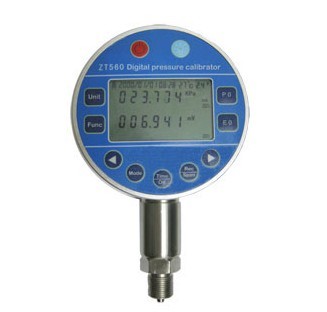
Test & Calibration Standards: High-precision digital pressure calibrators, deadweight testers, and pressure standards for laboratory and field calibration.
-
HVAC & Building Automation: Pressure sensors for air flow monitoring, duct pressure, and building pressure control.
-
Medical & Life Sciences: Sanitary and disposable pressure sensors for patient monitoring, respiratory equipment, and pharmaceutical processes.
-
Automotive & Transportation: Tire pressure monitors, manifold pressure sensors, brake pressure sensors, and fuel pressure sensors.
-
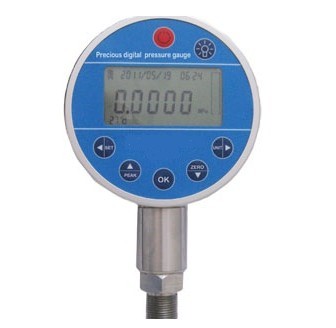
Portable & Handheld Instruments: Battery-operated manometers and pressure loggers for field service and maintenance.
-
Embedded & OEM Sensor Modules: Miniaturized pressure sensors for integration into consumer electronics, appliances, and industrial equipment.
Technology & Innovation Trends
-
MEMS & Silicon-Based Sensors: Micro-Electro-Mechanical Systems enabling miniaturized, low-cost, and high-volume pressure sensors with integrated electronics.
-
Wireless & IoT Connectivity: Battery-powered pressure transmitters with wireless protocols (LoRaWAN, NB-IoT, WirelessHART) for remote monitoring and easy installation.
-
Smart Sensors with Digital Communication: Integrated digital interfaces (I2C, SPI, IO-Link, HART) enabling configuration, diagnostics, and data transmission without additional signal conditioning.
-
Advanced Materials & Packaging: Use of corrosion-resistant alloys (Hastelloy, Monel), ceramic sensing elements, and robust housings for harsh chemical and high-temperature environments.
-
Self-Diagnosing & Predictive Capabilities: Intelligent sensors with embedded algorithms for detecting drift, clogging, or sensor degradation, enabling condition-based maintenance.
-
Multi-Parameter & Combined Sensors: Integration of pressure measurement with temperature, humidity, or flow sensing in a single device.
-
Energy Harvesting Solutions: Sensors powered by ambient energy (vibration, thermal gradients) eliminating battery replacements in remote locations.
Global Market Drivers
-
Industrial Automation & Process Optimization: Growing demand for precise pressure control in smart manufacturing, predictive maintenance, and Industry 4.0 initiatives.
-
Stringent Safety & Environmental Regulations: Compliance requirements in oil & gas, chemical processing, and power generation driving demand for reliable pressure monitoring and safety systems.
-
Energy Efficiency & HVAC Optimization: Building management systems and green building standards increasing adoption of pressure sensors for airflow optimization.
-
Healthcare & Medical Device Expansion: Growth in patient monitoring, diagnostic equipment, and wearable health devices incorporating miniature pressure sensors.
-
Automotive Electrification & ADAS: Electric vehicle battery management, brake-by-wire systems, and advanced driver-assistance systems requiring high-reliability pressure sensing.
-
Water & Wastewater Management: Infrastructure upgrades and smart water networks driving demand for pressure monitoring in distribution systems and treatment plants.
-
Aerospace & Defense Modernization: Next-generation aircraft, spacecraft, and defense systems requiring advanced pressure measurement solutions.
Industry Value Chain
-
Raw Material & Semiconductor Suppliers: Specialty metals, silicon wafers, ceramic substrates, packaging materials, and ASIC manufacturers.
-
Sensing Element & MEMS Foundries: Companies specializing in fabricating pressure sensing diaphragms, MEMS structures, and bare sensor chips.
-
Instrument & System Manufacturers: Firms that design, assemble, and calibrate complete pressure instruments, transmitters, and gauges.
-
Calibration & Metrology Services: Accredited laboratories providing traceable calibration and performance verification against international standards.
-
Distribution & Sales Channels: Industrial distributors, specialized instrument suppliers, direct sales teams, and online platforms.
-
System Integrators & Solution Providers: Engineering companies incorporating pressure instruments into larger control, monitoring, and data acquisition systems.
-
End Users: Process industries, manufacturing plants, utilities, building operators, research institutions, service providers, and OEMs.
Key Industry Challenges
-
Accuracy & Long-Term Stability: Maintaining measurement precision under varying environmental conditions (temperature, vibration) over extended periods.
-
Harsh Environment Durability: Designing sensors that withstand extreme pressures, temperatures, corrosive media, and mechanical shock.
-
Calibration Traceability & Maintenance: Ensuring measurement integrity through regular calibration against recognized standards.
-
Price Competition & Commoditization: Intense competition in standard pressure ranges and technologies leading to margin pressure.
-
Technology Standardization: Lack of uniform communication protocols and electrical interfaces across manufacturers.
-
Supply Chain Vulnerabilities: Dependence on specialized semiconductors, rare metals, and precision components.
-
Technical Complexity Integration: Managing the growing complexity of smart sensors with digital communication and diagnostic features.
Future Outlook
-
Pervasive IIoT Integration: Pressure sensors becoming standard data points in comprehensive industrial data ecosystems for real-time analytics and decision support.
-
AI-Enhanced Diagnostics & Predictive Analytics: Machine learning algorithms analyzing pressure data patterns for anomaly detection, predictive maintenance, and process optimization.
-
Miniaturization & Biomedical Applications: Development of ultra-miniature, implantable, and flexible pressure sensors for medical diagnostics and wearable health monitors.
-
Wireless & Energy-Autonomous Networks: Expansion of self-powered, wireless sensor networks for remote infrastructure monitoring and environmental sensing.
-
Digital Twin & Simulation Integration: Real-time pressure data feeding virtual process models for performance simulation, optimization, and operator training.
-
Sustainable & Green Technology Applications: Increased demand for pressure monitoring in hydrogen systems, carbon capture, renewable energy, and circular economy processes.
-
Cybersecurity for Connected Sensors: Enhanced security protocols and hardware for networked pressure instruments in critical infrastructure applications.


.jpg)
.jpg)