Industry Definition & Scope
The testing equipment industry encompasses the design, manufacturing, and distribution of instruments, devices, and systems used to measure, analyze, inspect, and verify the properties, performance, quality, safety, or compliance of materials, components, and finished products. This essential sector spans virtually all manufacturing and research fields, providing critical data for quality assurance, research & development, and regulatory compliance. It is a fundamental enabler of technological advancement and industrial quality control.
Key Product Categories
By Measurement Parameter & Application:
-
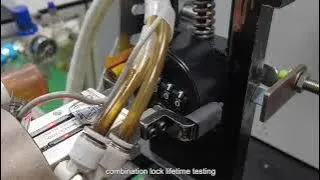
Mechanical Testing Equipment: Universal testing machines, hardness testers, impact testers, fatigue testers, and vibration shakers for evaluating strength, durability, and mechanical properties.
-
Electrical & Electronic Testing Equipment: Oscilloscopes, multimeters, spectrum analyzers, signal generators, network analyzers, and semiconductor testers for circuit analysis and electronic validation.
-
Dimensional & Metrology Equipment: Coordinate measuring machines, optical comparators, profilometers, laser scanners, calipers, and micrometers for precision measurement of physical dimensions and geometries.
-
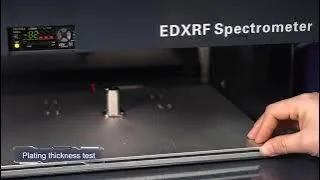
Material & Chemical Analysis Equipment: Spectrometers (optical, mass, atomic), chromatographs (gas, liquid), microscopes (optical, electron), thermal analyzers, and particle size analyzers for composition and structure analysis.
-
Non-Destructive Testing Equipment: Ultrasonic flaw detectors, X-ray inspection systems, eddy current testers, magnetic particle inspection kits, and thermographic cameras for internal defect detection without damaging samples.
-
Environmental & Reliability Test Chambers: Temperature/humidity chambers, thermal shock chambers, salt spray chambers, altitude chambers, and vibration tables for simulating harsh conditions and assessing product lifespan.
-
Life Sciences & Medical Testing Equipment: Blood analyzers, PCR machines, DNA sequencers, cell counters, and diagnostic imaging systems for healthcare and biotech applications.
By End-User Industry:
-
Electronics & Semiconductor: High-frequency and high-precision testers for components and circuit boards.
-
Automotive & Aerospace: Durability, safety, and performance test systems for vehicles and aircraft components.
-
Construction & Civil Engineering: Equipment for testing soil, concrete, asphalt, and structural materials.
-
Pharmaceutical & Biotechnology: Analytical instruments for drug development, quality control, and compliance.
-
Metals & Materials Manufacturing: Testers for raw materials and finished metal products.
-
Consumer Products & Packaging: Equipment for testing durability, safety, and compliance of finished goods.
Technology & Innovation Trends
-
Automation & Robotics Integration: Development of automated test cells, robotic sample handling, and fully integrated production-line testing systems for high-throughput applications.
-
IoT Connectivity & Data Analytics: Smart sensors and cloud-connected instruments enabling remote monitoring, predictive maintenance, and big data analysis of test results.
-
Portable & Handheld Devices: Miniaturization of testing capabilities for field use, on-site inspections, and point-of-need measurements.
-
Advanced Sensor Technology: Development of MEMS sensors, hyperspectral imaging, and AI-enhanced vision systems for higher sensitivity and new measurement capabilities.
-
Digital Twins & Simulation Software: Integration of physical testing with virtual simulation models for comprehensive product validation and reduced prototyping cycles.
-
Modular & Flexible Platform Designs: Configurable instruments that can be upgraded or adapted for multiple testing requirements through software and hardware modules.
-
Sustainability-Focused Testing: Equipment designed for energy efficiency and specialized to test environmental impact, recyclability, and carbon footprint of products.
Global Market Drivers
-
Stringent Quality & Safety Regulations: Global standards and regulatory requirements across industries (automotive, aerospace, medical, toys) mandating rigorous testing and certification.
-
Manufacturing Quality & Process Control: Need for consistent product quality, reduced defect rates, and optimized production processes in competitive markets.
-
Research & Development Investment: Continuous innovation in electronics, materials science, pharmaceuticals, and新能源 driving demand for advanced analytical instruments.
-
Miniaturization & Complexity of Products: Increasing need for precision measurement and testing of micro-components, advanced materials, and complex assemblies.
-
Supply Chain Globalization: Requirement for standardized testing protocols and equipment to ensure consistency across distributed manufacturing networks.
-
Predictive Maintenance & Asset Management: Growing adoption of condition monitoring and preventive testing in industrial operations to avoid downtime.
-
Consumer Awareness & Brand Protection: Companies investing in testing to ensure product safety, avoid recalls, and protect brand reputation.
Industry Value Chain
-
Component & Sensor Suppliers: Manufacturers of specialized sensors, detectors, optics, precision mechanical parts, and electronic modules.
-
Instrument Manufacturers: Companies that design and assemble complete testing instruments and systems.
-
Software & Analytics Providers: Developers of control software, data analysis packages, and AI algorithms for test data interpretation.
-
System Integrators & Service Providers: Firms that design custom testing solutions, provide calibration services, and offer technical support.
-
Distributors & Sales Channels: Global and regional networks for instrument sales, rental, and aftermarket support.
-
Calibration & Certification Labs: Accredited facilities providing traceable calibration and performance verification services.
-
End Users: Manufacturing companies, research institutions, quality control labs, government agencies, and service providers.
Key Industry Challenges
-
High Development Costs & Long Cycles: Significant R&D investment required for advanced instruments, with lengthy development timelines.
-
Technical Complexity & Specialization: Need for deep application expertise and continuous training to develop, operate, and interpret results from sophisticated equipment.
-
Intense Competition & Price Pressure: Global competition from established players and low-cost manufacturers, particularly in standardized instrument segments.
-
Rapid Technological Obsolescence: Continuous innovation shortening product lifecycles and requiring frequent upgrades.
-
Calibration & Maintenance Demands: Requirement for regular, traceable calibration and skilled technicians to maintain measurement accuracy.
-
Lack of Standardization: In some emerging fields, absence of global testing standards can hinder market development.
-
Economic Sensitivity: Capital equipment purchases are often deferred during economic downturns, creating cyclical demand patterns.
Future Outlook
The testing equipment industry is evolving toward more intelligent, connected, and integrated quality assurance ecosystems.
-
AI-Powered Testing & Analysis: Widespread adoption of machine learning for automated defect recognition, root cause analysis, and optimization of test parameters.
-
Convergence with Production Systems: Tighter integration of testing equipment into smart manufacturing lines (Industry 4.0) for real-time, in-process quality control.
-
Democratization of Testing: More affordable, user-friendly instruments expanding testing capabilities to smaller companies and non-specialist users.
-
Servitization & Testing-as-a-Service: Growth of subscription-based testing services and outcome-based contracts, where customers pay for verified results rather than equipment ownership.
-
Focus on Sustainability & Circular Economy: New testing methods and equipment to validate product longevity, recyclability, and environmental compliance.
-
Enhanced Cybersecurity for Connected Instruments: Critical importance of securing test data and networked equipment in sensitive applications.
-
Expansion into New Application Fields: Growing demand for testing equipment in新能源, additive manufacturing (3D printing), and advanced biotechnology.