
What is High-Pressure Die Casting: A Detailed Introduction
In modern manufacturing, high-pressure die casting (HPDC) is a widely used and efficient metal forming process. It involves injecting molten metal into a mold under high pressure and rapidly cooling it to solidify, ultimately forming the desired metal part. This process is widely applied in industries such as automotive, aerospace, electronics, household appliances, and communications equipment due to its high efficiency, precision, and excellent surface quality. This article introduces this important die casting technology, covering the basic principles, common materials, process flow, technological improvements, and its advantages.
Basic Principles of High-Pressure Die Casting
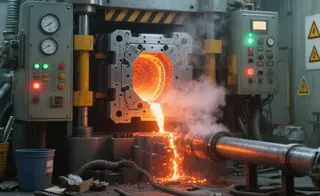
High-pressure die casting is a process in which molten metal is injected into a mold cavity under high pressure, rapidly cooling and solidifying to form a part. The entire process relies on powerful die casting machines, which use hydraulic systems to apply high pressure, forcing the molten metal into the mold, where it solidifies in a very short time.
Die casting molds are typically made from two high-strength steel parts, forming the fixed and movable ends of the mold. The mold cavity is shaped to match the part's design. After the molten metal is injected under high pressure, the mold remains closed until the metal completely solidifies. Once solidified, the mold opens, and the cast part is ejected, completing one production cycle.
The key to high-pressure die casting lies in its "high pressure" and "high speed." The injection pressure typically ranges from 1,500 to 25,000 PSI, and the injection time lasts only a few milliseconds. This rapid filling capability ensures that the metal fully fills every detail of the mold before solidifying, allowing for the formation of complex structures in a single step.
Common Materials for High-Pressure Die Casting and Their Properties
High-pressure die casting is suitable for a variety of metals, with aluminum, magnesium, and zinc being the most common. Each material has unique physical and process characteristics that make them suitable for different applications.
1. Aluminum Alloys in High-Pressure Die Casting
Aluminum is one of the most commonly used materials in high-pressure die casting, especially in the automotive and aerospace sectors. Aluminum offers excellent fluidity, lightweight properties, superb thermal conductivity, and corrosion resistance. Common aluminum alloys used in die casting include 380, 390, 412, 443, and 518.
380 Alloy: Known for good casting performance and mechanical properties, it is suitable for automotive parts, electrical housings, etc.
390 Alloy: High in silicon content, offering excellent wear resistance, ideal for engine components.
443 Alloy: Excellent thermal conductivity, often used for electronic product housings.
Due to aluminum's higher melting point (around 660°C), it is typically processed using cold-chamber die casting systems. Aluminum die castings have good dimensional stability, high strength, and excellent conductivity, making them ideal for producing complex parts that require high precision.
2. Magnesium Alloys in High-Pressure Die Casting
Magnesium is a metal lighter than aluminum, with a density approximately two-thirds that of aluminum. It offers excellent machinability and higher specific strength. Common magnesium alloys include AZ91D, AM60, AS41B, and AE42.
AZ91D: High strength and good corrosion resistance, making it the most commonly used magnesium alloy.
AM60: Excellent ductility, suitable for manufacturing automotive wheel hubs, seat frames, etc.
Due to magnesium's lower melting point (around 650°C), it is suitable for hot-chamber die casting systems. Magnesium alloys are widely used in electronics enclosures, automotive parts, and other applications, particularly where weight reduction is crucial.
3. Zinc Alloys in High-Pressure Die Casting
Zinc is the most process-friendly metal among the three. It can be used in both hot-chamber and cold-chamber systems. Common zinc alloys include Zamak 2, 3, and 5.
Zamak 3: Known for good fluidity and dimensional stability, making it ideal for high-volume production.
Zamak 5: Offers higher strength, suitable for parts with higher mechanical performance requirements.
Zinc die castings are strong, wear-resistant, and dimensionally stable, making them ideal for small, complex, high-precision parts such as locks, zipper heads, and electronic connectors.
4. Other Materials
In addition to the above three main materials, high-pressure die casting can also be used with copper, lead, tin, and other alloys, each with unique characteristics suitable for specific industrial needs. For example:
Copper Alloys: Excellent conductivity and corrosion resistance, ideal for electrical components and valves.
Tin Alloys: With a low melting point, these are suitable for manufacturing precision electronic components.
When selecting materials, factors such as product usage environment, mechanical performance requirements, and cost should be considered. Professional die casting services may be employed for material evaluation.
High-Pressure Die Casting Process Flow
The high-pressure die casting process generally involves four main steps: mold preparation, metal injection, ejection of the casting, and post-processing. Depending on the product requirements, improvements such as vacuum die casting, slow-fill die casting, or semi-solid metal processing (SSM) may be used.
1. Mold Preparation
Before each production cycle begins, the mold must be cleaned to remove any residues or contaminants. The inner mold surface is then lubricated to help regulate mold temperature and facilitate the ejection of the cast part, as well as extend the mold's service life.
Temperature control of the mold is also crucial. If the temperature is too high, the metal may stick to the mold, while too low a temperature may affect the metal's flow. Therefore, molds typically have cooling systems to ensure precise temperature control.
2. Metal Injection
Molten metal is poured into the injection chamber and injected into the mold cavity under high pressure. The injection process can be either hot-chamber or cold-chamber injection.
Hot-chamber Injection: The injection system is submerged in the furnace, with metal entering the nozzle via a plunger. This is suitable for low-melting metals such as zinc, magnesium, and lead.
Cold-chamber Injection: The molten metal is first poured into the cold-chamber sleeve and then pushed into the mold by a hydraulic plunger. This is used for higher-melting metals such as aluminum, brass, and magnesium.
Injection pressure typically ranges from 1,500 to 25,000 PSI, and the entire process is completed in a very short time. The mold must be completely sealed to withstand the high pressure and ensure the metal fully fills the cavity.
3. Ejection of the Casting
Once the metal has solidified, the mold opens, and ejector pins push the casting out of the mold cavity. Ejector pins are usually located at the movable end of the mold to ensure smooth part removal.
The ejection process requires careful control of force and speed to avoid deforming or damaging the casting. For more complex parts, multi-stage ejection mechanisms may be used.
4. Post-Processing
After ejection, any excess material such as flash, sprues, or runners must be removed. Common methods include trimming, sawing, or CNC machining. The metal waste can be recycled, reducing production costs.
In some cases, additional post-processing may be necessary, such as heat treatment, surface treatment (e.g., spraying or plating), or leak testing, to meet the final product's performance requirements.
Advantages of High-Pressure Die Casting
High-pressure die casting is popular in manufacturing due to several significant advantages.
1. High Production Efficiency
Compared to low-pressure casting or gravity casting, high-pressure die casting has a faster injection speed and shorter production cycle, making it ideal for high-volume production. Its high level of automation significantly increases production efficiency.
2. High Dimensional Precision and Surface Quality
High-pressure die castings offer excellent dimensional accuracy and surface finish, reducing the need for post-processing and saving both time and cost. The good surface quality also benefits subsequent processes such as plating and painting.
3. Thin-Walled Structures
High-pressure die casting can achieve thin-walled structures with wall thicknesses as small as 0.40mm. This helps reduce product weight and improve performance. Additionally, it allows for the integration of other components (such as screws or bushings) into the casting process, simplifying assembly.
4. Long Mold Life and Low Cost
Die casting molds are usually made from high-strength steel, offering a long service life. Molds can be reused across multiple production cycles, thus reducing the cost per part.
5. Capability for Complex Parts
High-pressure die casting is suitable for producing complex, finely detailed parts. The flexibility of mold design allows this process to meet a wide variety of product demands, with applications in automotive engine housings, electronic enclosures, aerospace components, and more.
Conclusion
High-pressure die casting is an advanced manufacturing process that injects molten metal under high pressure into molds, cooling and forming it into precise parts. It is widely used in automotive, electronics, and aerospace industries, with aluminum, magnesium, and zinc alloys being the primary materials. The process involves mold preparation, metal injection, ejection, and post-processing, ensuring high-quality production with minimal waste.
High-pressure die casting offers numerous advantages, including high production efficiency, precision, excellent surface quality, and the ability to create complex parts. By optimizing material selection, process parameters, and mold management, this process can significantly reduce production costs and enhance manufacturing efficiency, making it an essential technique in modern industrial production.
Send your message to this supplier
Related Articles from the Supplier
What is a Cold Forged Stainless Steel Wing Nut?
- Sep 06, 2024
What is Stainless Steel Precision Casting Process
- Jan 08, 2025
What is Multi-Directional Die Forging?
- Feb 11, 2025
What is Centrifugal Casting Technology?
- Apr 17, 2025
What is Permanent Mold Casting?
- May 22, 2025
What Influence Aluminum Alloy Casting Quality
- Nov 06, 2024
Related Articles from China Manufacturers
What is High-Pressure Labyrinth Control Valve?
- Jul 11, 2024
What is a High Pressure Gate Valve?
- Aug 13, 2020
What is High Performance Butterfly Valve
- Mar 18, 2020

What Is a High-Quality Liquid Oxygen Storage Tank?
- Sep 09, 2025
What is Handle Butterfly Valve
- Sep 08, 2015
What Is Safety Valve?
- May 10, 2017
What Is A Ball Valve
- May 25, 2017
Related Products Mentioned in the Article



Supplier Website
Source: http://www.forging-casting-stamping.com/what-is-high-pressure-die-casting-a-detailed-introduction.html