
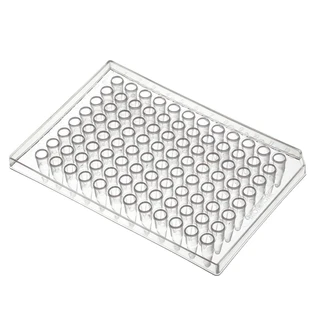
Non-sterile PCR Plates, 0.2 mL, Half-Skirted, Polypropylene
Key Specifications / Features
Detail Information
Detail Infomation
Product: 0.2 ml PCR PlatesMaterial: Polypropylene (PP)
Type: Half-skirted
Color: Transparent
The Number of Well: 96
Production Environment: Class 100000 Dust-free Workshop
Certification: ISO 13485, ISO 9001
Application: Laboratory Usage
Production Capacity: 2000 CTNS/M
Lead Time: 15-25 Days
Sample: For Free (1-5 pcs)
Features
·Free of DNase, RNase, pyrogen, endotoxin
·Autoclavable (121℃, 20 min)
·Stable and not easy to deform
·Clear alphabetic and numerical marks, to facilitate sample recording
·Thin wall and uniform surface, to ensure the effectiveness of heat transfer
·Suitable for mainstream & real-time PCR instruments
·Applied in genomics, medicine, molecular biology, etc
·Multiple sealing methods for better sealing and less liquid evaporation
·High transparency for effective reactions in PCR experiments
Share on
Send your message to this supplier
FAQs
What is a Non-Rising Stem Gate Valve?
A valve where the stem does not move vertically but rotates internally to raise or lower the gate. This design is ideal for installations with limited vertical space.
How Does a Non-Rising Stem Gate Valve Work?
The handwheel turns the stem, which in turn moves the gate up or down inside the valve body without changing the external height of the stem.
How Does a Rising Stem Gate Valve Work?
The handwheel lifts the stem and gate together, providing a visual indication of whether the valve is open or closed.
Which Valve Should I Choose?
Use a rising stem valve for above-ground applications where visibility and ease of maintenance are important.
Use a non-rising stem valve for underground or space-limited installations.
Conclusion
The choice between rising stem and non-rising stem gate valves depends on your specific application needs. For clear valve status indication and easy maintenance, go with a rising stem valve. For compact installations, a non-rising stem valve is the better option.
Similar Products

Related Searches
Products you might also like






- www.pulse-bio.com
- Address: No.386,Building 1,Shui Kou Road, Chengdu, SiChuan, China
- Phone: 028
- Business Type: Manufacturer
Source: https://www.pulse-bio.com/non-sterile-pcr-plates-0-2-ml-half-skirted-polypropylene.html