
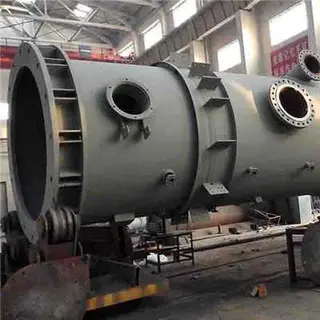
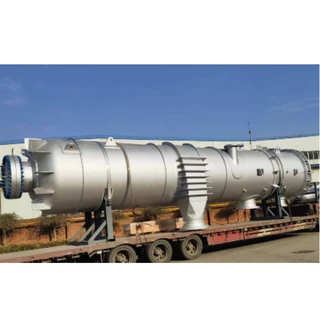
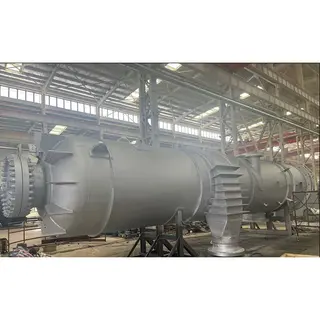
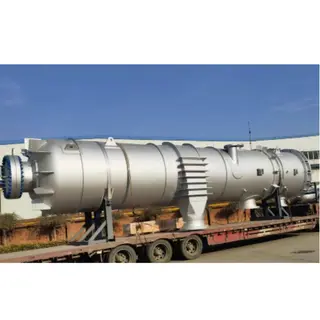
Steam Water Separator, ASME SA516-70, 20MWe, 2286mm, Two Phase
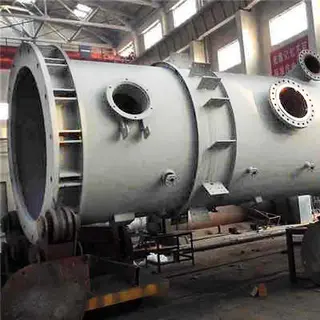
Key Specifications / Features
Detail Information
Design: Baffle Type.
Material: Carbon Steel SA516-70.
Manufacture Code: ASME.
Specification: ID 2286mm.
Volume: 20MWe.
Design Pressure: 2.18 MPa.
Design Temperature: 216℃.
Fluid: Two Phases (Steam/Water).
Project Name: Geothermal Power Production Field in Leyte.
Application: For the Removal of Entrained Liquids from Steam.
Baffle Type Steam Separator
A Baffle Type Separator (also called vane type separator) consists of a number of baffle plates, which may cause the flow to change direction a number of times when it passes through the separator body. The suspended water droplets own a greater mass and a greater inertia than the steam; therefore, when there is a change in flow direction, the dry steam flows around the baffles and the water droplets collect on the baffles. Moreover, as the separator owns a large cross-sectional area, there is a resulting reduction in the speed of fluids. This reduces the kinetic energy of the water droplets, and most of them will fall out of suspension. The condensate collects in the bottom of the separator, where it is drained away through a steam trap.
Send your message to this supplier
FAQs
What is a Non-Rising Stem Gate Valve?
A valve where the stem does not move vertically but rotates internally to raise or lower the gate. This design is ideal for installations with limited vertical space.
How Does a Non-Rising Stem Gate Valve Work?
The handwheel turns the stem, which in turn moves the gate up or down inside the valve body without changing the external height of the stem.
How Does a Rising Stem Gate Valve Work?
The handwheel lifts the stem and gate together, providing a visual indication of whether the valve is open or closed.
Which Valve Should I Choose?
Use a rising stem valve for above-ground applications where visibility and ease of maintenance are important.
Use a non-rising stem valve for underground or space-limited installations.
Conclusion
The choice between rising stem and non-rising stem gate valves depends on your specific application needs. For clear valve status indication and easy maintenance, go with a rising stem valve. For compact installations, a non-rising stem valve is the better option.
Similar Products

Related Searches
Products you might also like



DFC Tank Pressure Vessel Manufacturer Co., Ltd.
- http://www.dfctank.com/
- Address: 河北省 石家庄市
- Phone: 136 7323 9196
- Business Type: Manufacturer
Source: https://www.dfctank.com/steam-water-separator-asme-sa516-70-20mwe-2286mm-two-phase.html