
Aluminum Alloy Forging: Techniques, Features & Applications
In today's industrial manufacturing field, aluminum alloys have become an indispensable material due to their unique physical and chemical properties. The aluminum alloy forging process further endows aluminum alloys with superior performance, allowing them to shine in industries such as aerospace, automotive manufacturing, and electronic equipment. This article will deeply analyze the key stages, characteristics, and practical advantages of the aluminum alloy forging process, allowing you to appreciate the charm of this exquisite technology.
Types and Selection of Aluminum Alloy Forging Blanks
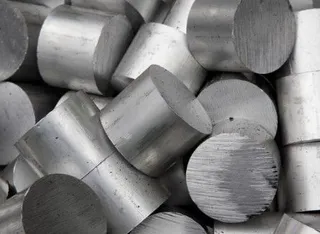
The selection of forging blanks is crucial, as it directly affects the quality of the final forged parts. Common blank types mainly include cast billets, cold-rolled billets, and extruded billets.
1. Cast Billets
Cast billets are extremely common in the production of consumer manufacturing cast steel parts and various small die forgings. For medium- and large-sized die forgings, when extrusion rod specifications are unavailable, most also select forged cast billets as blanks. However, before using cast billets for aluminum alloy forging, their surfaces need to be mechanically processed to achieve a roughness of less than 12.5 μm to ensure smooth subsequent processing. Additionally, homogenization quenching must be performed, which effectively improves the plastic deformation of the blank, giving it better workability during forging.
2. Cold-Rolled Billets
Cold-rolled billets are an important form of aluminum alloy material, featuring a macroscopic fiber structure. These billets are commonly used for the production of wallboard cast steel parts and many medium- and small-sized thin cast steel parts, with cold-rolled thickness generally less than 100 mm. Compared with extruded and forged billets, cold-rolled billets perform excellently in processability, exhibiting uniform structure and physical properties. Therefore, when selecting rod material for the production of medium- and large-sized key cast steel parts and die forgings, cold-rolled rods are often the first choice. Only when cold-rolled rods cannot meet requirements will extrusion rods and forged rods be considered.
3. Extruded Billets
Extruded aluminum alloy billets, due to their high manufacturing compatibility, are currently widely used in the production of most cast steel parts as aluminum alloy forging blanks. In particular, extruded rods are especially suitable as blanks for short-shaft cast steel parts. However, extruded billets are not flawless; they may contain defects such as coarse-grained rings on the surface, lamination, or surface porosity. If these defects are not addressed, they may cause problems during die forging. Therefore, it is necessary to eliminate these surface defects before forging to ensure the quality of the forged parts.
Blank Preparation Methods
During the preparation of aluminum alloy forging blanks, cutting is a critical step. Common cutting methods include CNC saws, CNC lathes, or CNC milling machines. These devices can precisely cut and process blanks according to design requirements, ensuring dimensional accuracy and surface quality. In some special cases, less commonly, a shearing machine may be used, or in certain situations, the blank may be heated and then cut with a hammer. Different cutting methods are suitable for blanks of different shapes, sizes, and material characteristics, and must be reasonably chosen according to specific production needs and blank properties.
Heating Process for Aluminum Alloy Forging Blanks
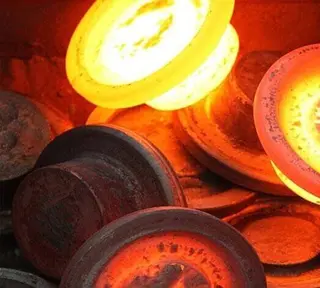
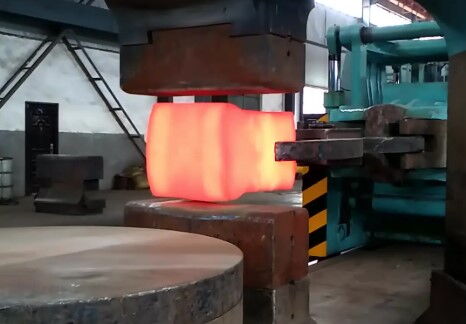
Aluminum alloy forging has a narrow temperature range, so the heating process of blanks requires strict control. To ensure that the blank reaches the required temperature range and facilitates precise control by automatic systems, box-type resistance furnaces should be used for heating. The furnace interior requires forced air circulation, and heating elements with insulating screens should be used to ensure uniform and stable heating. Currently, according to All-Shun Aluminum sources, most aluminum alloy forging blanks in China are heated using iron-chromium-aluminum wire electric furnaces, with furnaces equipped with fully automatic control instruments accurate within ±10°C. To accurately measure temperature, a thermoresistance is installed 100–160 mm from the blank in the heating zone, ensuring measurement accuracy and compliance with process requirements. If heating furnaces are unavailable, gas stoves or oil furnaces can be considered, but flames must not directly contact the blank to avoid overheating. Additionally, fuel sulfur content must be low to prevent sulfur penetration into grain boundaries at high temperatures, which would affect aluminum alloy performance.
Characteristics of Aluminum Alloy Forging Process
Aluminum alloy forging possesses many unique characteristics, which give aluminum alloys distinct behavior and performance during forging and determine their application scope and advantages in industrial manufacturing.
1. Fluidity
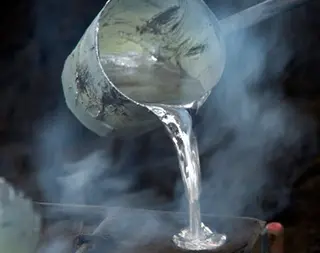
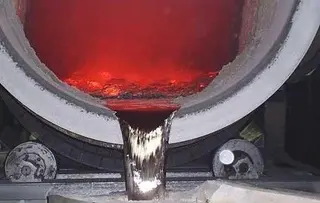
Fluidity refers to the ability of the alloy liquid to fill the mold, directly determining whether the alloy can forge large and complex castings. Among aluminum alloys, eutectic alloys have relatively good fluidity. However, fluidity is influenced by many factors, the most critical being temperature and the presence of solid-phase particles such as metal oxides, metal compounds, and other contaminants in the alloy liquid. External fundamental factors include pouring temperature and pressure. In actual production, when the alloy composition is fixed, besides enhancing the smelting process (refining and slag removal), mold processability should also be improved, such as increasing the permeability of sand molds and optimizing metal mold venting and temperature. Simultaneously, without affecting casting quality, slightly raising the pouring temperature ensures alloy fluidity, thus guaranteeing casting quality and dimensional accuracy.
2. Shrinkage
Shrinkage is an important characteristic of aluminum alloy forging. Generally, the alloy experiences three stages from liquid pouring to solidification and cooling to room temperature: liquid shrinkage, solidification shrinkage, and solid-state shrinkage. Shrinkage decisively affects casting quality, influencing porosity, stress generation, crack formation, and dimensional changes. In actual production, casting shrinkage is usually divided into volumetric shrinkage and linear shrinkage, with linear shrinkage commonly used to measure alloy shrinkage. Accurately understanding aluminum alloy shrinkage is essential for predicting and controlling casting dimensional accuracy and preventing defects.
3. Gas Absorption
Aluminum alloys easily absorb gases, which is another important characteristic. The liquid aluminum and aluminum alloy components react with moisture in furnace materials, combustion products, and molds, producing hydrogen absorbed by the alloy. Notably, higher temperatures increase hydrogen absorption; for example, at 700°C, the hydrogen solubility in 100 g aluminum is 0.5–0.9 mL, while at 850°C, solubility increases 2–3 times. Additionally, the presence of alkali metal impurities significantly raises hydrogen solubility in aluminum. Therefore, during aluminum alloy forging, the smelting environment and process parameters must be strictly controlled to minimize hydrogen generation and absorption, preventing porosity and ensuring the density and performance of the castings.
Features of Aluminum Alloy Forging
As one of the most important processing methods for aluminum alloys, forging has many remarkable features, giving it an irreplaceable position in industrial production.
1. Performance Enhancement
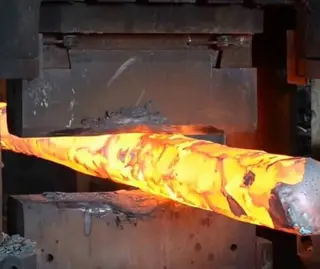
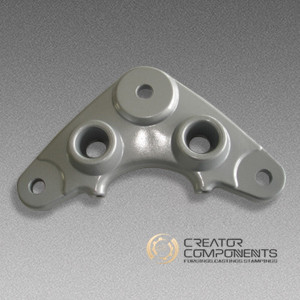
Forging significantly improves aluminum alloy properties. During forging, the internal microstructure is optimized, and grains are refined, increasing mechanical properties such as strength, toughness, and hardness. Forging also improves physical and corrosion-resistant properties, enabling better adaptability and stability under harsh conditions. For example, in aerospace, forged aluminum alloy components withstand high loads and complex stress environments while maintaining corrosion resistance, ensuring flight safety.
2. Forged Component Production
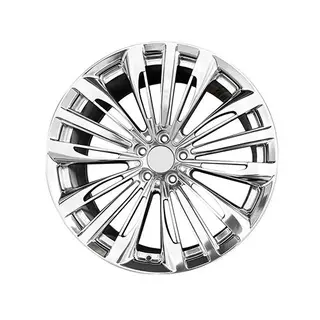
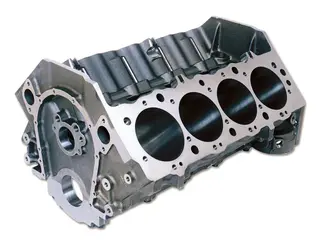
Aluminum alloy forging can produce components of various shapes and sizes to meet different industrial requirements. From simple shafts to complex structural parts, precise forging processes can manufacture them. In automotive manufacturing, forged aluminum engine components and wheels are lightweight yet strong, enhancing fuel efficiency and performance. In electronics, forged aluminum casings and structural parts offer excellent electrical and thermal conductivity and aesthetic quality, meeting heat dissipation and electromagnetic shielding requirements.
3. Wide Application
Due to its low density, high strength, conductivity, thermal performance, and corrosion resistance, forged aluminum alloys are widely applied. Industrial use of aluminum is second only to steel, covering almost all manufacturing fields. In construction, forged aluminum doors, windows, and curtain walls are aesthetically pleasing and provide insulation and sealing. In shipbuilding, forged aluminum structural parts reduce vessel weight, improve speed and fuel efficiency, and resist seawater corrosion, extending service life.
Design Considerations for Aluminum Alloy Forgings
The design of aluminum alloy forgings is complex and critical, relating not only to part shape and structure but also to material deformability and flow characteristics. Although aluminum alloys are highly forgeable, their design requires attention to special factors.
1. Flow Line Distribution
Flow line distribution is crucial in designing structural aluminum alloy forgings, especially for directions sensitive to stress corrosion. High-strength aluminum alloys are particularly sensitive to stress corrosion; exposed flow line ends on flash can accelerate corrosion. Therefore, during mold and part design, flow line direction and distribution must be carefully arranged to reduce stress concentration and corrosion, improving service life and reliability.
2. Pre-Forging Die Design
Pre-forging die design principles are similar to steel forging dies. Due to aluminum's narrow forging temperature range, reheating is required after pre-forging. Therefore, aluminum pre-forging dies are separately designed with flash grooves, ensuring reasonable deformation and initial shape control while accommodating excess metal to maintain quality and dimensional accuracy.
3. Forging Removal and Parting Surface Design
Aluminum forgings are rigidly weak and easily deform when removed from the mold. To facilitate removal, complex surfaces are usually placed in the lower die. For symmetric parting surfaces, increasing the upper die draft angle or reducing the lower die draft helps keep the forging in the lower die, minimizing deformation and ensuring dimensional accuracy and shape integrity.
Failure Modes and Material Selection of Aluminum Forging Dies
Failure modes of aluminum forging dies mainly include cracking and surface wear, often due to fatigue (thermal and mechanical). Selecting lower hardness improves toughness but reduces fatigue crack resistance. Generally, higher-strength dies resist fatigue better. Aluminum forging die materials typically have a strength of 250–400 MPa. Small dies prioritize high-strength materials like H13 steel, which provides high strength and thermal fatigue resistance. For large dies, H13's lifespan is not much longer than 5CrNiMo steel, so 5CrNiMo is preferred for its balanced performance, economy, and ability to ensure die life while reducing production costs.
Conclusion
The advantage of aluminum alloy forging lies in fully utilizing the material's excellent properties while producing high-quality forgings through precise processing. Aluminum alloy forging plays a crucial role in modern industrial manufacturing. From blank selection and processing to precise control during forging, and from forging design to die optimization, every step contains profound technical content and practical experience. By thoroughly understanding the characteristics, key techniques, and advantages of aluminum alloy forging, we can better utilize this process, promote the wide application of aluminum alloys across industries, and contribute to industrial development and technological progress.
Send your message to this supplier
Related Articles from the Supplier
Guide to Aluminum Alloy Forging Technology
- Nov 13, 2025

Features of Aluminum Alloy Forgings
- Apr 01, 2015
What Influence Aluminum Alloy Casting Quality
- Nov 06, 2024
Related Articles from China Manufacturers



Related Products Mentioned in the Article

Supplier Website
Source: http://www.forging-casting-stamping.com/aluminum-alloy-forging-techniques-features-applications.html