
Control Valve Actuators: Key Types and Functions
On this page
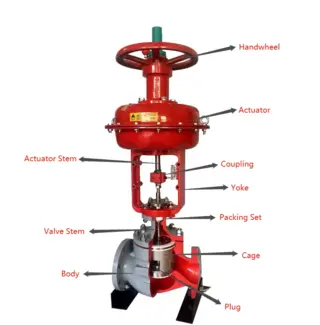
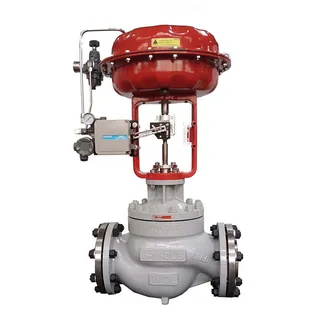
Control valve actuators are essential components in industrial systems, providing the force necessary to move and control valves for precise flow, pressure, or temperature regulation. Actuators come in various types, but this discussion focuses on two primary categories: pneumatic actuators and electric actuators, which are widely used across different applications.
They are suitable for applications requiring high force output and a long stroke.
They are ideal for lower-pressure applications and provide precise control for throttling.
Commonly used in fail-safe applications where valves need to close during power or pressure loss.
They are used for applications requiring a fail-open response during pressure failure.
Compensate for external factors like friction to minimize hysteresis (lag in response).
Allow for increased spring range to enhance closing force, enabling the valve to handle higher differential pressures.
For example, in an air-to-open valve and actuator system, the positioner adjusts air pressure to ensure the valve opens fully, overcoming friction and other resistance.
Pneumatic Actuators
Pneumatic actuators rely on compressed air to generate the force required for valve operation. They are known for their reliability, speed, and ability to operate in hazardous environments where electric actuators might pose risks. Pneumatic actuators are particularly effective for controlling valves in demanding industrial settings.Types of Pneumatic Actuators
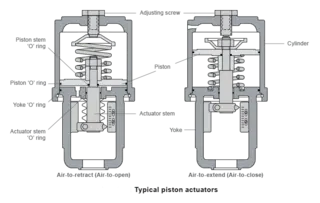
Piston Actuators
These actuators use a piston and cylinder arrangement to convert air pressure into mechanical motion.They are suitable for applications requiring high force output and a long stroke.
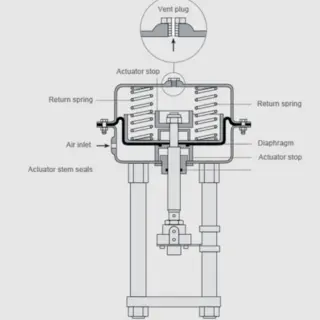
Diaphragm Actuators
Diaphragm actuators use a flexible diaphragm to transmit air pressure, moving the valve stem.They are ideal for lower-pressure applications and provide precise control for throttling.
Reverse Acting (Spring-to-Extend)
In reverse-acting actuators, the spring extends the actuator stem when air pressure is released.Commonly used in fail-safe applications where valves need to close during power or pressure loss.
Direct Acting (Spring-to-Retract)
Direct-acting actuators retract the stem when air pressure is removed.They are used for applications requiring a fail-open response during pressure failure.
Role of Valve Positioners
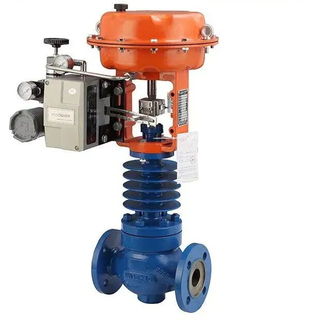
Valve positioners enhance the accuracy and performance of pneumatic actuators. These devices adjust the actuator’s air pressure to maintain the desired valve position in response to input signals. Positioners also:Compensate for external factors like friction to minimize hysteresis (lag in response).
Allow for increased spring range to enhance closing force, enabling the valve to handle higher differential pressures.
For example, in an air-to-open valve and actuator system, the positioner adjusts air pressure to ensure the valve opens fully, overcoming friction and other resistance.
Electric Actuators
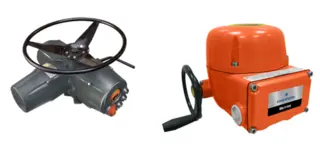
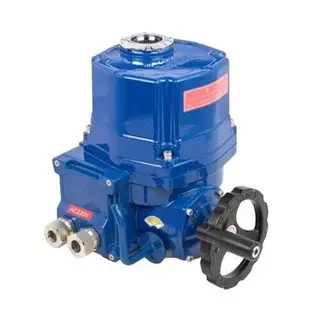
Electric actuators use electrical energy to create motion, either rotary or linear, to control valves. These actuators are valued for their precision, easy integration into automated systems, and ability to operate without compressed air systems.Key Features of Electric Actuators
High Precision
Electric actuators provide fine control over valve position, making them ideal for applications demanding accuracy.
Automation-Friendly
Easily integrated into modern control systems via digital communication protocols like Modbus or Profibus.
Environmentally Friendly
They do not require air compressors, reducing energy consumption and maintenance costs.
Flexible Power Options
Operate on various voltage levels, catering to different industrial setups.
Water and wastewater treatment.
HVAC systems.
Chemical processing.
Oil and gas industries.
Applications
Electric actuators are commonly used in settings where precise control is critical, such as:Water and wastewater treatment.
HVAC systems.
Chemical processing.
Oil and gas industries.
Pneumatic vs. Electric Actuators
|
Feature |
Pneumatic Actuators |
Electric Actuators |
|
Power Source |
Compressed air |
Electrical energy |
|
Control Precision |
Moderate |
High |
|
Speed |
Fast |
Moderate |
|
Maintenance |
Requires air system maintenance |
Low maintenance requirements |
|
Hazardous Environments |
Suitable due to no electrical components |
May require additional safety precautions |
|
Energy Efficiency |
Relatively low (requires compressors) |
Higher energy efficiency |
Choosing the Right Actuator
Selecting the right actuator depends on several factors:Application Needs
Determine if high-speed operation (pneumatic) or high precision (electric) is more important.
Environmental Conditions
For explosive or hazardous environments, pneumatic actuators are generally safer.
Energy Availability
Consider the availability of compressed air or electrical power.
Cost Considerations
Factor in the initial investment and long-term maintenance costs.
Conclusion
Control valve actuators are indispensable in modern industrial systems, enabling precise and reliable control of processes. Pneumatic actuators excel in speed and reliability under harsh conditions, while electric actuators offer precision and energy efficiency. By understanding the unique advantages of each type and integrating tools like valve positioners, operators can optimize performance to meet specific application requirements.
Send your message to this supplier
Related Articles from the Supplier
Control Valve Actuators: Key Types and Functions
- Nov 18, 2024
Maintenance of Pneumatic Control Valve Actuators
- Jan 24, 2025
Control Valve Testing and Inspection
- Oct 29, 2024
Related Articles from China Manufacturers
Related Products Mentioned in the Article

- https://www.cncontrol.cn/
- Address: Yongjia, Wenzhou, Zhejiang, P. R. China
- Phone: 86 577
- Business Type: Industry & Trading, Manufacturer,
Supplier Website
Source: https://www.controlvalve.net/news/control-valve-actuators-key-types-and-functions.html