1. Industry Definition & Scope
The Printing Services Industry encompasses commercial businesses that provide professional printing, finishing, and related pre-press and post-press services to clients across all sectors. It is a diverse service-based industry that transforms digital or physical artwork into physical media on various substrates, playing a critical role in marketing, communication, packaging, publishing, and functional applications.
2. Major Service Categories & Specializations
-
By Output Type & Application:
-
Commercial & Marketing Print: Brochures, flyers, business cards, stationery, posters, banners, direct mail.
-
Publishing & Document Services: Books, magazines, catalogs, manuals, annual reports.
-
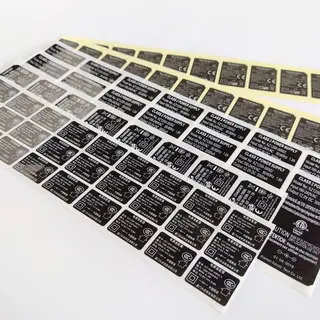
Packaging Print: Labels, folding cartons, corrugated boxes, flexible packaging. Highly specialized and regulated.
-
Large Format & Signage: Trade show graphics, vehicle wraps, billboards, wall murals, point-of-sale (POS) displays.
-
Promotional Products: Printed apparel, drinkware, bags, and other branded merchandise.
-
Functional & Industrial Print: Printed electronics, product decoration, security printing (banknotes, certificates).
-
-
By Printing Process & Technology:
-
Digital Printing (Predominant for Short Run):
-
Inkjet: Versatile for paper, signage, textiles, and packaging prototyping.
-
Electrophotography (Laser/Toner): Common for documents, brochures, and variable data printing.
-
-
Traditional Analog Printing (Cost-effective for Long Run):
-
Offset Lithography: High-quality, high-volume printing on paper and board.
-
Flexography: Dominant for flexible packaging (films, bags) and corrugated boxes.
-
Screen Printing: For textiles, signage, and uneven surfaces.
-
-
Emerging & Niche Processes: 3D printing, dye-sublimation (for textiles), and nanographic printing.
-
-
By Service Model:
-
Full-Service Providers: Handle everything from design and pre-press to printing, binding, and fulfillment.
-
Trade Printers: Specialize in high-volume production for other print shops or resellers.
-
Online Print-on-Demand (POD): Web-to-print platforms offering automated, user-driven ordering for standardized products.
-
Specialty Finishers: Focus on value-added services like die-cutting, foil stamping, embossing, and binding.
-
3. Industry Chain Structure
Upstream:
-
Raw Material Suppliers: Paper and paperboard mills, ink and toner manufacturers, plate and chemistry producers, substrate suppliers (plastics, textiles, metals).
-
Equipment & Software Manufacturers: Press manufacturers (Heidelberg, HP, Canon, Komori), RIP software, prepress workflow, and MIS (Management Information System) providers.
Midstream (The Service Providers):
-
Printing Companies: Ranging from small "quick print" shops to large, industrial-scale facilities.
-
In-house Corporate Print Departments: Dedicated teams within large organizations.
-
Franchises: Networks like Minuteman Press, AlphaGraphics.
-
Online Print Marketplaces: Aggregators connecting customers with printers.
Downstream:
-
Clients (End-Buyers):
-
Marketing & Advertising Agencies
-
Corporate Marketing/Communication Departments
-
Educational Institutions & Non-profits
-
Publishers
-
Product Manufacturers (for packaging)
-
Retailers & Event Organizers
-
Small Businesses & Individuals
-
-
Distributors & Mailing Houses: Handle logistics, distribution, and mailing services for printed materials.
4. Key Market Dynamics & Characteristics
-
High Fragmentation: Dominated by a large number of small and medium-sized enterprises alongside a few large consolidators.
-
Transition from Analog to Digital: Core technology shift driving changes in business models, run lengths, and service offerings.
-
Decline in Traditional Print Volumes: Due to digital media substitution for communication and marketing (e.g., email vs. direct mail), though not uniform across all segments.
-
Growth in Value-Added & Specialized Segments: Packaging, large format, and customized print are growth areas.
-
Extreme Price Sensitivity & Competition: Especially for commoditized products like basic business cards and flyers.
-
Essential but Evolving Role: Print remains vital for tangible, high-impact communication, brand trust, and packaging, but its applications are evolving.
5. Development Trends
-
Automation & Web-to-Print Integration:
-
End-to-end automated workflows from online ordering to production and shipping.
-
MIS/ERP Integration for real-time job tracking, estimating, and inventory management.
-
-
Mass Customization & Personalization:
-
Leveraging digital printing for variable data printing (VDP), allowing for unique, one-to-one marketing materials and publications.
-
Growth of personalized packaging for e-commerce and DTC brands.
-
-
Sustainability as a Business Imperative:
-
Adoption of soy/vegetable-based inks, FSC-certified papers, and recycling programs.
-
Process optimization to reduce waste, energy, and chemical usage.
-
Offering carbon-neutral printing options to clients.
-
-
Expansion into Hybrid Services:
-
Printers evolving into marketing service providers, offering design, mailing, digital asset management, and multichannel campaign management.
-
-
Onshoring & Regionalization:
-
A shift towards local production for faster turnaround, reduced logistics costs, and supply chain resilience, especially for packaging and marketing materials.
-
6. Major Challenges & Opportunities
Challenges:
-
Digital Substitution & Declining Run Lengths: Constant pressure from electronic alternatives reducing demand for certain print products.
-
Rising Costs & Skilled Labor Shortage: Increasing costs for materials, energy, and difficulty finding skilled press operators and technicians.
-
Industry Consolidation & Margin Pressure: Competition from online giants and large trade printers squeezing smaller players.
-
Keeping Pace with Technology Investment: High cost of updating to newer digital and automated equipment.
-
Perception as a "Commodity" Industry: Overcoming the low-value perception for basic print jobs.
Opportunities:
-
Packaging & E-commerce Growth: Explosive demand for printed packaging, labels, and customized e-commerce experiences.
-
Integration of Print with Digital Campaigns: Using QR codes, AR, and personalized URLs (PURLs) to make print interactive and measurable.
-
Niche & High-Value Specialization: Focusing on areas like luxury packaging, security printing, or textile printing where expertise commands a premium.
-
Becoming a Supply Chain Partner: Providing just-in-time, on-demand print and fulfillment services for corporate clients.
-
Sustainable Printing Leadership: Differentiating by offering verifiable, eco-friendly processes and products, appealing to environmentally conscious clients.