
Difference Between Double and Single Jersey Circular Knitting Machines
Introduction
Knitting is one of the most essential and versatile methods of textile manufacturing. It involves the interlooping of yarns to form fabric, a technique that has evolved dramatically over centuries. While hand knitting dates back to ancient times, modern industrial knitting owes much of its efficiency to circular knitting machines. These machines are designed to produce large volumes of knitted fabric quickly, meeting the high demands of the fashion, sportswear, and home textile industries.
Among the wide array of knitting technologies available today, single jersey and double jersey circular knitting machines are two of the most prominent. Each has distinct construction, capabilities, and applications. Understanding the differences between them is essential for manufacturers, designers, and textile engineers aiming to produce specific fabric qualities.
In this article, we delve into the core differences between single and double jersey circular knitting machines—highlighting their working principles, structural outputs, key advantages and disadvantages, and ideal applications.
What is a Single Jersey Circular Knitting Machine?
A single jersey circular knitting machine is a weft knitting machine equipped with only one set of needles mounted on a single cylinder. As the name implies, it produces single-faced fabrics, meaning the structure appears different on the front and back sides. The front typically features vertical columns of knit stitches, while the reverse displays horizontal loops.
These machines operate with latch needles and are generally simpler in design and operation than double jersey machines. The fabrics produced are lightweight, stretchy, and widely used in T-shirts, undergarments, casual wear, and sportswear.
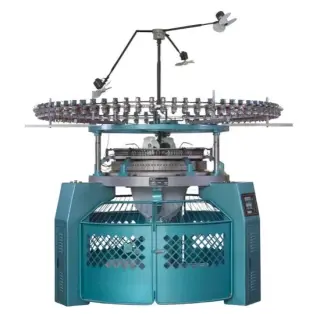
Key Characteristics of Single Jersey Circular Knitting Machine
Needle Configuration: Single set of needles on a cylinder
Fabric Type: One-sided (face and back look different)
Gauge: Available in fine to coarse gauges
Stitch Type: Primarily plain knit, but variations like pique and mesh are possible
Advantages of Single Jersey Machines
High Production Speed
Due to their simpler configuration, single jersey machines operate at higher speeds, allowing mass production in minimal time.
Lower Yarn Consumption and Wastage
These machines use less yarn per square meter of fabric, resulting in cost savings and reduced waste.
Ease of Operation
The machinery is less complex, making it easier to set up, maintain, and operate—especially suitable for less experienced operators.
Versatility in Lightweight Fabrics
Ideal for producing breathable, stretchable, and soft fabric structures used in everyday garments.
Cost-Effective Investment
Single jersey machines are generally more affordable, both in terms of initial investment and operational expenses.
Limitations of Single Jersey Circular Knitting Machine
Fabric Curling: Edges of single jersey fabric tend to curl, requiring additional processing for stability.
Limited Thickness: Cannot produce thicker or double-layered fabrics.
Less Dimensional Stability: These fabrics are prone to distortion after washing if not treated correctly.
What is a Double Jersey Circular Knitting Machine?
A double jersey circular knitting machine—sometimes referred to as an interlock or rib machine—features two sets of needles mounted on both a cylinder and a dial. This configuration allows the machine to produce double-faced fabrics where both sides are structurally identical or symmetrically constructed.
Double jersey machines create thicker, more stable, and more durable fabrics. These fabrics are commonly used in garments where structure, warmth, and opacity are required—such as leggings, jackets, sweaters, and upholstery.
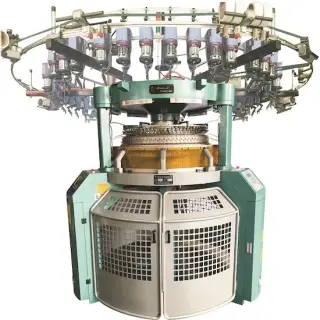
Key Characteristics of Double Jersey Circular Knitting Machine
Needle Configuration: Two needle beds (cylinder and dial) operating together
Fabric Type: Double-sided (front and back have similar or identical appearance)
Stitch Variations: Rib, interlock, and purl structures
Cam Systems: Complex cam arrangements allow advanced patterning
Advantages of Double Jersey Machines
Thicker and Warmer Fabric Output
Double-layered fabrics provide insulation and are ideal for colder climates and durable applications.
Excellent Dimensional Stability
Due to the intermeshed structure, fabrics resist curling and deformation during washing and wear.
Capability for Complex Patterns
Advanced double jersey machines can knit intricate rib or jacquard patterns for high-end fashion and technical applications.
Wide Application Range
Suitable for both fashion and industrial textiles—ranging from sweaters to seat covers.
Enhanced Comfort and Fit
Rib knits offer superior elasticity and body-conforming fit, commonly used in cuffs, waistbands, and sportswear.
Limitations of Double Jersey Circular Knitting Machine
Slower Production Speed
The mechanical complexity and dual knitting action often reduce production speed compared to single jersey machines.
Higher Investment and Maintenance Costs
More sophisticated components result in a higher cost of purchase, training, and upkeep.
Increased Yarn Usage
Producing thicker fabrics requires more yarn, contributing to higher material costs.
Comparison Table: Single Jersey vs Double Jersey Circular Knitting Machine
|
Feature |
Single Jersey Machine |
Double Jersey Machine |
|
Needle Arrangement |
Single set (cylinder) |
Two sets (cylinder and dial) |
|
Fabric Structure |
One-sided |
Double-sided |
|
Thickness of Fabric |
Thin, lightweight |
Thick, durable |
|
Elasticity |
Good in one direction |
Excellent in both directions |
|
Speed |
High |
Moderate to low |
|
Cost |
Lower machine and yarn cost |
Higher investment and yarn consumption |
|
Applications |
T-shirts, underwear, activewear |
Jackets, sweaters, upholstery |
|
Fabric Curling |
Yes |
Minimal to none |
|
Pattern Complexity |
Basic patterns |
Advanced rib and interlock designs |
|
Dimensional Stability |
Lower, prone to deformation |
Higher, maintains shape |
Applications in the Textile Industry
Single Jersey Machine Applications
T-Shirts & Tops: Lightweight, breathable, and cost-effective
Sportswear: Allows for excellent moisture management and flexibility
Casual Wear: Everyday garments that require softness and comfort
Innerwear: Due to its softness and stretch, single jersey is ideal for undergarments
Double Jersey Machine Applications
Sweaters and Outerwear: Thicker fabric ensures warmth and durability
Sports Uniforms: Offers stretch and strength needed for active movement
Home Textiles: Fabrics for blankets, cushion covers, and upholstery
Industrial Knits: Seat covers, technical fabrics for filtration or medical use
Innovation and Automation Trends
With advancements in digital control systems and smart manufacturing, modern single and double jersey machines are increasingly automated. Some machines now integrate:
Computerized Jacquard systems for advanced pattern control
Servo motors for precise needle movement
Touchscreen interfaces for ease of operation
Real-time yarn tension control
Automatic doffing and batching systems
These upgrades significantly reduce labor dependency, improve fabric consistency, and enhance production flexibility. Manufacturers are also adopting IoT-based monitoring for predictive maintenance and productivity tracking.
Choosing Between Single and Double Jersey Machines
When selecting a circular knitting machine, consider the following factors:
End Use of the Fabric: Determine whether the fabric needs to be soft and breathable (single jersey) or structured and warm (double jersey).
Fabric Weight and Thickness: If bulk or insulation is needed, double jersey is more suitable.
Budget: For startups or cost-sensitive projects, single jersey machines offer a more affordable entry point.
Pattern Complexity: If your fabric requires ribs, cables, or jacquard designs, a double jersey machine is essential.
Production Volume: Single jersey machines offer higher throughput for mass production of basic knits.
Conclusion
Single jersey and double jersey circular knitting machines both serve critical roles in the textile industry, but they differ significantly in structure, function, and application. While single jersey machines are ideal for lightweight, cost-effective fabrics, double jersey machines excel in producing high-quality, durable, and warm fabrics for a wider range of end uses.
Understanding these differences empowers textile manufacturers and designers to make informed decisions, optimize production processes, and deliver products that align with market demands. As knitting technology continues to evolve, integrating digital controls, automation, and eco-friendly innovations, both machine types are set to remain indispensable tools in the future of textile manufacturing.
Send your message to this supplier
Related Articles from the Supplier

Related Articles from China Manufacturers
Related Products Mentioned in the Article

Supplier Website
Source: https://www.xmnyuanda.com/news/difference-between-double-and-single-jersey-circular-knitting-machines.html