
API Standard for Globe Valves: A Comprehensive Guide
Introduction
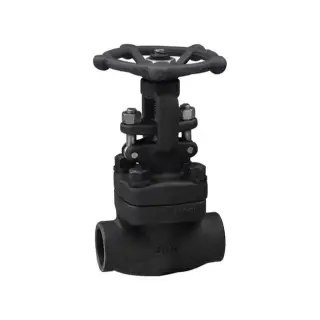
In industrial piping systems, the choice of valves directly influences the efficiency, safety, and longevity of operations. Among the myriad of valve standards, API 602 stands out as a benchmark for small forged steel valves used in critical applications. These valves—covering gate, globe, and check designs up to 4 inches (DN 100)—are specifically engineered for high-pressure, high-temperature, and corrosive environments, making them indispensable in the oil, gas, petrochemical, and power generation industries.
While gate valves are often chosen for isolation, the globe valve is a versatile solution that combines both isolation and precise flow regulation, enabling operators to control process variables effectively. This article provides an exhaustive look at API 602 globe valves, their construction, applications, performance advantages, selection guidelines, and maintenance practices.
Understanding API 602
The American Petroleum Institute (API) developed API 602 to establish uniform design, manufacturing, and testing criteria for small forged steel valves. Unlike cast valves, forged construction enhances mechanical strength and durability, which is crucial in high-pressure systems where safety and reliability cannot be compromised.
Key Features of API 602 Valves
Material Specifications
Valves are forged from carbon steel, alloy steel, or stainless steel. Common grades include ASTM A105, ASTM A182 F6A, F304, and F316. Forged materials ensure high tensile strength, toughness, and resistance to cracking under extreme conditions.
Size Limitations
Designed for valves up to 4 inches (DN 100), making them suitable for smaller pipeline systems in refineries, chemical plants, and power stations.
Pressure Ratings
Capable of operating under high-pressure ranges, often from Class 1500 to Class 6000, depending on the material and design.
Temperature Tolerance
Suitable for handling steam, hydrocarbons, and other high-temperature fluids.
Sealing Integrity
Equipped with wear-resistant seats and polished stems, these valves offer minimal leakage and low emissions, meeting modern environmental standards.
The forged construction ensures that API 602 valves can withstand high mechanical stresses, providing reliability and safety for demanding industrial applications.
What is a Globe Valve?
A globe valve is a type of linear motion valve used to start, stop, and regulate fluid flow in pipelines. The defining characteristic is its disc-and-seat arrangement, which allows precise control over flow rate. Globe valves are particularly effective for throttling because the flow path changes direction inside the valve body, creating a predictable pressure drop that can be managed accurately.
Globe Valve Components
Body: Provides structural integrity; forged steel bodies ensure high pressure and temperature resistance.
Bonnet: Can be bolted or welded, providing access for maintenance and sealing the valve’s internals.
Disc: Moves up and down to control fluid flow; the disc design influences flow characteristics.
Seat Ring: Machined and hardened to resist wear and ensure tight sealing.
Stem: Transfers actuator motion to the disc; polished for minimal friction and long-term durability.
Actuator or Handwheel: Allows manual or automated operation.
Design Features of API 602 Globe Valves
API 602 globe valves are engineered for high-pressure, small-diameter pipelines. Some notable features include:
OS&Y (Outside Screw and Yoke) Design
Enhances visibility of the valve position (open/closed).
Protects the threaded stem from corrosive fluids.
Sealing Surfaces
Hardened or coated for wear resistance.
Provides tight shutoff, minimizing leakage even under high-pressure conditions.
Compact Forged Body
Designed for tight spaces in piping systems without sacrificing mechanical integrity.
Bonnet Types
Bolted Bonnet: Allows easy access for maintenance.
Welded Bonnet: Ensures maximum leak-proof integrity, ideal for critical services.
Applications of API 602 Globe Valves
Due to their durability, precise control, and compact size, API 602 globe valves are widely used in industries that require reliable flow regulation:
Petrochemical Industry: Control of hydrocarbons, chemicals, and solvents in high-pressure pipelines.
Power Generation: Steam, cooling, and auxiliary systems for turbines, boilers, and generators.
Oil and Gas Transmission: Ensures smooth and predictable gas flow in pipelines.
High-Pressure Steam Systems: Used to regulate steam to turbines, pressure vessels, or heating systems.
Refineries: Handles high-temperature, high-pressure fluids where leakage or emissions are unacceptable.
The combination of compact size, high strength, and precise flow control makes API 602 globe valves a preferred choice for demanding industrial processes.
Selecting the Right Globe Valve
Choosing the correct globe valve requires careful analysis of operational, environmental, and system-specific factors.
1. Understand the Application
Fluid Characteristics: The type of fluid—liquid, gas, corrosive, or toxic—determines the material of the valve body and internal components.
Pressure and Temperature: High-pressure systems require valves that can maintain structural integrity, while high-temperature fluids demand materials resistant to creep and thermal expansion.
Flow Requirements: Consider whether the valve will primarily regulate flow or serve as an on/off device. Globe valves are particularly effective for throttling and precise flow control.
2. Determine Valve Size
Pipe Size Compatibility: The valve diameter should match the pipeline to prevent pressure losses or turbulence.
Flow Coefficient (Cv): Calculate Cv based on fluid type, pressure drop, and flow rate. This ensures the valve can handle required flow without over-sizing, which can lead to inefficient system performance.
3. Material Selection
Carbon Steel: Suitable for non-corrosive hydrocarbons and water systems.
Alloy Steel: For high-pressure, high-temperature applications.
Stainless Steel: Resistant to corrosion, suitable for chemicals or marine environments.
Trim Material: Consider hardened metals or coatings like Stellite for the disc and seat to reduce wear.
4. End Connections
Flanged Ends: Simplify installation and maintenance; standard ASME flanges are common.
Threaded Ends: For small pipelines, typically below 2 inches.
Socket Weld Ends: Ensure strong, leak-proof joints in high-pressure small-diameter pipelines.
5. Operation and Automation
Manual Operation: Handwheel or lever for infrequent operation.
Actuated Operation: Pneumatic, hydraulic, or electric actuators for automated systems. Actuation is critical in large-scale or remote installations.
Advantages of API 602 Globe Valves
High Durability
Forged construction withstands high pressure and temperature extremes.
Precise Flow Control
Excellent throttling capability for regulating system flow.
Leak-Proof Design
Tight sealing surfaces reduce emissions, protecting the environment.
Compact Design
Saves space in pipelines without compromising performance.
Versatile Material Options
Suitable for hydrocarbons, steam, chemicals, and corrosive fluids.
Compliance with Standards
Tested to API 598, ASME B16.34, and ISO 15848 for safety, pressure rating, and emissions.
Maintenance and Troubleshooting of Globe Valves
Even the most reliable valves require periodic maintenance to ensure longevity and optimal performance. Key practices include:
Routine Inspection: Check for leaks, corrosion, and wear on stem and seat surfaces.
Lubrication: Ensure smooth movement of stems and actuators.
Seat and Disc Replacement: Replace worn or damaged seats to maintain tight shutoff.
Pressure Testing: Regularly test valves to ensure compliance with operational pressure requirements.
Cleaning: Remove deposits or corrosion that may affect valve operation.
Common issues include stem leakage, seat erosion, and actuator malfunction, which can be resolved with timely maintenance and inspection.
Real-World Case Studies
Case Study 1: Petrochemical Plant
A refinery in Texas replaced cast globe valves with API 602 forged steel valves in its high-pressure steam lines. The result:
Improved throttling control of steam flow.
Reduced leakage and emissions by 25%.
Increased operational safety under fluctuating pressure conditions.
Case Study 2: Natural Gas Pipeline
A midstream gas operator installed API 602 globe valves in 4-inch lateral pipelines. Benefits observed:
Compact design simplified installation in tight spaces.
High-pressure tolerance ensured reliability during peak flow periods.
Reduced maintenance costs due to durable forged body and trim materials.
Conclusion
API 602 globe valves are a robust, reliable, and versatile solution for industrial pipelines requiring high-pressure and precise flow control. With forged construction, durable materials, tight sealing, and compliance with international standards, these valves are ideal for petrochemical, power generation, steam, and gas applications.
Selecting the right valve requires careful consideration of fluid characteristics, pressure, temperature, flow requirements, and materials. When properly applied and maintained, API 602 globe valves ensure system efficiency, operational safety, and long-term durability.
As industrial processes evolve and environmental standards become stricter, the importance of high-quality, forged steel valves will continue to grow. API 602 globe valves remain a trusted choice for engineers and operators seeking precision, reliability, and compliance in small-diameter high-pressure systems.
Send your message to this supplier
Related Articles from the Supplier
API Standard for Globe Valves: A Comprehensive Guide
- Nov 26, 2025
Related Articles from China Manufacturers
API Standard Valves: Overview and Applications
- Aug 29, 2024

API 608 Standard Ball Valves
- Aug 04, 2020



Introduction to Major API Valve Standards
- Nov 22, 2025
Related Products Mentioned in the Article

Supplier Website
Source: https://www.mfrsvalve.com/news/api-standard-for-globe-valves-a-comprehensive-guide.html