
Mobile Light Tower Generators: Powerful Portable Illumination
In large-scale infrastructure projects, emergency rescue operations, nighttime construction, and major events, adequate lighting is not only a critical safety requirement but also a key factor in improving work efficiency. However, traditional fixed lighting systems or handheld lighting equipment often struggle to meet the demands of wide-area, high-intensity, and mobile operations. Under such conditions, mobile light tower generators, with their outstanding overall performance, have become an ideal solution for illuminating the night and managing complex environments.
Components of a Mobile Light Tower Generator
A typical mobile light tower generator generally consists of the following core components:
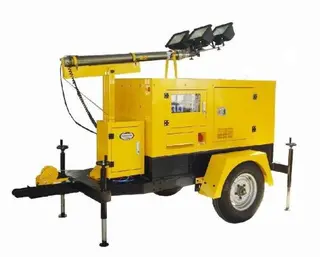
1. Mobile Chassis
The mobile chassis provides mobility and stability, incorporating axles, tires, and stabilizing legs (hydraulic or manual outriggers to ensure stability once deployed), towing mechanisms (for trailer-type units), or drive systems (for self-propelled models). These components allow the equipment to operate steadily on different terrains and to be easily transported to the required lighting location.
2. Generator Set
Commonly powered by diesel or gasoline generators, the generator set serves as the primary power source, with output typically ranging from several kilowatts to tens of kilowatts. It supplies stable electrical power to the lighting system, ensuring reliable operation even in areas without access to an external power grid.
3. Battery Pack
Lithium battery packs are used in fully electric or hybrid models, enabling silent and zero-emission operation. Depending on battery capacity and lamp power, they can support several to dozens of hours of lighting. This configuration is particularly suitable for environmentally sensitive locations such as sports venues or film production sites.
4. Control System
The control system manages generator operation, battery charging and discharging, and power distribution. Through an integrated control panel or wireless remote control, operators can easily manage mast lifting, lamp angle adjustment, and power start/stop functions without complex climbing or manual intervention.
5. Lifting System
The mast typically features a multi-section telescopic design, usually with three or four sections, made of high-strength, lightweight materials. Hydraulic cylinders or electric winches/screw drives provide smooth and reliable lifting to the required working height. Locking mechanisms ensure the mast remains securely fixed once extended.
6. Lighting System
The lighting head integrates multiple high-efficiency LED floodlights (commonly four, six, or more units). A pan-and-tilt mechanism enables horizontal rotation and vertical angle adjustment, allowing precise control of light direction. Lighting switches, brightness adjustment (on some models), and grouped or zoned control functions allow flexible configuration to suit different lighting requirements.
7. Control Unit
The centralized control panel (mounted on the unit) typically integrates mast lift controls, lighting switches, rotation and tilt controls (or a separate remote controller), generator start/stop and status indicators (such as voltage, frequency, fuel level, and fault alarms), battery status displays (voltage and charge percentage), auxiliary power outlets (e.g., 220V AC sockets for temporary power supply), and safety indicators (such as stabilizer deployment status).
Advantages of Mobile Light Tower Generators
Mobile light tower generators are highly integrated, flexible, and powerful lighting solutions. By combining high-output lighting, an elevating mast, an independent power source (generator or battery pack), and a mobile chassis (trailer-mounted or self-propelled), they can meet lighting demands in a wide range of complex scenarios.
1. Powerful Lighting Performance
The tower head is typically equipped with multiple high-power LED floodlights, with individual lamp power ranging from several hundred to several thousand watts. LED technology offers high brightness, excellent luminous efficiency, long service life, low energy consumption, and instant start-up. With 360° horizontal rotation and adjustable vertical tilt, the lights provide all-around, shadow-free illumination. The strong light output can effectively cover areas from several thousand to tens of thousands of square meters, delivering uniform and expansive lighting for work sites.
2. Flexible Lifting System
Constructed from high-strength materials such as aluminum alloy or high-strength steel, the mast can be raised to heights of several meters to over ten meters within minutes using hydraulic or electric lifting systems. This significantly expands the lighting coverage area, minimizes obstruction from ground-level objects, and provides more uniform illumination.
3. Convenient Mobility
Mobile light tower generators are equipped with robust trailer chassis (usually single-axle or dual-axle) or self-propelled wheeled bases. They can be easily towed by vehicles such as pickup trucks or construction vehicles, or moved independently to any required location, allowing rapid deployment without the complexity of fixed wiring.
4. Reliable Independent Power Supply
Integrated diesel or gasoline generators, high-capacity lithium battery packs, or hybrid combinations provide continuous and stable power. With no reliance on the local power grid, these mobile light tower generators offer true “plug-and-play” operation, making them ideal for remote areas, new construction sites, or locations with weak electrical infrastructure.
5. Rugged and Durable Design
Designed for industrial-grade applications, mobile light tower generators feature excellent resistance to wind, rain, and dust (typically rated IP54 or higher), along with strong vibration resistance. Their robust construction ensures reliable operation in harsh environments such as construction sites, mines, ports, and outdoor locations.
6. Easy Operation
Mast lifting, lamp angle adjustment, and power control can usually be performed via an integrated control panel or wireless remote control, eliminating the need for climbing. Essential safety features such as overload protection, leakage protection, lift limit switches, and emergency stop buttons ensure safe operation.
Common Applications of Mobile Light Tower Generators
Mobile light tower generators are widely used in various scenarios that require efficient illumination, including:
- Construction Sites: Nighttime construction is common in building projects. Mobile light tower generators provide sufficient illumination for activities such as concrete pouring, steel structure installation, and earthworks, ensuring safety and uninterrupted progress.
- Road Construction and Maintenance: Road construction and maintenance often take place at night to minimize traffic disruption. Mobile light tower generators can be rapidly deployed along work zones, delivering bright and reliable illumination to ensure work quality and personnel safety.
- Emergency Response and Disaster Relief: In rescue and disaster relief operations, time is critical. Mobile light tower generators can quickly provide powerful illumination at emergency sites, supporting rescue teams during earthquakes, floods, fires, and other emergencies.
- Mining and Exploration Sites: Mining environments are complex and often harsh, making reliable nighttime lighting essential. Mobile light tower generators can withstand challenging conditions while providing strong illumination for mining and exploration activities.
- Sports Venues: Many sporting events are held at night, where high-quality lighting is essential. Mobile light tower generators can be quickly installed to provide uniform and bright illumination, ensuring excellent visibility for athletes and spectators alike.
Maintenance of Mobile Light Tower Generators
To ensure consistent performance and long service life, regular maintenance is essential. Key maintenance points include:
1. Lamp Maintenance
- Metal Halide Lamps: Typically have a service life of around 10,000 hours. While relatively easy to replace, they become extremely hot during operation and must be allowed to cool before maintenance.
- LED Lamps: The light source itself is not replaceable, requiring replacement of the entire fixture if necessary. LED lamps have a much longer average service life of approximately 50,000 hours.
2. Engine Maintenance
To prevent unnecessary failures, diesel engines require proper maintenance, including:
- Checking coolant and engine oil levels.
- Replacing fuel and air filters.
- Regularly inspecting engine belts for wear.
- Using only high-quality fuel.
3. Tire Maintenance
Regular tire maintenance is essential to ensure proper mobility. Tires are subject to wear and punctures, so routine inspection and maintaining correct inflation pressure are crucial.
Recommendations for Using Mobile Light Tower Generators
To maximize performance and safety, consider the following usage recommendations:
- Correct Placement: Position the tower at an elevated location to achieve wider coverage and ensure the light effectively reaches the work area.
- Regular Maintenance: Inspect and replace lamps as needed, clean lenses and reflectors, check for structural damage, and ensure all components function properly.
- Avoid Extreme Weather: Do not operate mobile light tower generators during heavy rain, strong winds, or thunderstorms, as these conditions may damage equipment and pose safety risks.
- Ensure Stability: Always ensure the unit is securely stabilized, especially on uneven terrain. Use stabilizers or sandbags to prevent tipping or movement.
- Prepare Spare Parts: Keep spare lamps and replacement parts on hand to minimize downtime in case of failure.
- Train Operators: Thoroughly read the operation manual and train operators on proper use, maintenance, and safety procedures to reduce accident risks and extend equipment life.
Conclusion
With their powerful illumination, flexible mobility, reliable independent power supply, and rugged design, mobile light tower generators are ideal lighting solutions for a wide range of demanding applications. Whether on construction sites, road projects, emergency rescue operations, or large-scale events, mobile light tower generators provide efficient and dependable lighting support. Through proper use and regular maintenance, mobile light tower generators can maintain excellent performance over the long term, ensuring stable and reliable illumination for diverse working environments.
Send your message to this supplier
Related Articles from the Supplier
Advantages and Essentials of Mobile Generators
- Apr 02, 2024
Related Articles from China Manufacturers


Related Products Mentioned in the Article

Supplier Website
Source: https://genset-generator-suppliers.com/news/mobile-light-tower-generators-powerful-portable-illumination.html