
An Introduction to Fluorine-Lined Control Valve
In modern industrial production, the widespread presence of corrosive media poses severe challenges to pipeline systems. This is particularly true in fields such as chemical, pharmaceutical, and metallurgical industries, where high-concentration acids and alkalis, strong oxidizers, and various complex chemical substances flow through pipelines year-round. Even slight negligence can result in equipment damage or even safety accidents. Against this backdrop, valves that can resist corrosion stably over the long term and ensure precise regulation are particularly critical.
Fluorine-Lined Control Valves have emerged in response to such demands. By using high-molecular fluoroplastic as a protective barrier, they perfectly combine excellent corrosion resistance with precise flow control capabilities, becoming a reliable and irreplaceable corrosion-resistant guardian in many harsh operating conditions.
This article systematically elaborates on Fluorine-Lined Control Valves from structural principles, product features, application fields, to selection criteria and maintenance methods, helping readers gain a comprehensive and in-depth understanding of this essential equipment.
Structure & Principle of Fluorine-Lined Control Valves
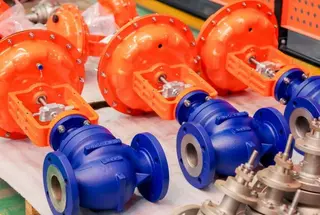
A Fluorine-Lined Control Valve mainly consists of the valve body, valve plug, actuator, positioner, and other components. The interior of the valve body is lined with fluoroplastic, which acts as a sturdy shield capable of resisting the erosion of highly corrosive media such as acids, alkalis, and salts, providing solid support for the stable operation of the valve under harsh conditions.
The actuator serves as the power source of the control valve. It receives control signals from the control system and drives the valve plug to open, close, or adjust within the valve body.
The positioner functions as the precision controller of the control valve. It converts the control signals from the system into signals recognizable by the pneumatic actuator, thereby precisely controlling the position of the valve plug to maintain stable control of the flow, pressure, and other parameters of the medium in the pipeline.
The working principle of the Fluorine-Lined Control Valve is to control the position of the valve plug via the actuator, thereby changing the flow rate of the medium in the pipeline. When the control system sends a signal to the actuator, the actuator drives the valve plug to perform the corresponding action within the valve body, allowing the medium flow to reach the preset value.
Main Features of Fluorine-Lined Control Valves
After understanding the basic structure and working principle of Fluorine-Lined Control Valves, we further explore their unique advantages. The reason Fluorine-Lined Control Valves stand out among many regulating valve products and are widely used in complex industrial scenarios lies primarily in a series of remarkable features.
1. Outstanding Corrosion Resistance
Corrosion resistance is one of the most prominent features of Fluorine-Lined Control Valves. The valve body cavity, valve core, valve seat, and valve stem are all lined with 2.5–3 mm thick F46, which can resist acids, alkalis, and strong corrosive media. Whether it is sulfuric acid, hydrochloric acid, hydrofluoric acid, or aqua regia, it can easily handle these conditions.
The dual sealing structure using PTFE bellows and packing ensures no leakage. Since the valve core and valve seat are soft-sealed, the leakage rate is lower than the national Class IV standard. This allows the Fluorine-Lined Control Valve to effectively prevent medium leakage when handling corrosive media, ensuring the safe operation of the pipeline system.
2. High Regulation Accuracy
Fluorine-Lined Control Valves use compact multi-spring actuators, which are small in size, light in weight, and highly precise. This type of actuator can provide strong driving force in limited spaces while ensuring accurate movements.
During regulation, the positioner plays a vital role. It converts control signals into precise pneumatic signals, thereby accurately controlling the position of the valve plug and stabilizing the flow, pressure, and other parameters of the medium in the pipeline. Whether handling small flow variations or precise pressure adjustments, Fluorine-Lined Control Valves can easily meet the stringent process requirements of industrial production.
3. Multiple Actuation Methods and Material Options
Fluorine-Lined Control Valves support various actuation methods, including manual, electric, and pneumatic. For applications requiring remote or automatic control, electric or pneumatic actuation should be selected.
When choosing, factors such as installation position, operational convenience, and safety should be considered. For instance:
In tight spaces or where frequent operation is required, electric actuation may be more suitable.
In applications with high safety requirements, pneumatic actuation has advantages.
Additionally, Fluorine-Lined Control Valves come in various materials, including cast steel and stainless steel. The appropriate material should be selected based on different operating environments and requirements to improve durability and reliability. For example:
Cast-steel lined valves may be more suitable for high-temperature and high-pressure conditions.
Stainless-steel lined valves are preferable where high corrosion resistance is required.
Application Fields of Fluorine-Lined Control Valves
Fluorine-Lined Control Valves are widely used in chemical, pharmaceutical, metallurgical, and food processing industries.
Chemical industry: Control the flow and pressure of strongly corrosive media such as sulfuric acid, hydrochloric acid, and hydrofluoric acid.
Pharmaceutical industry: Control the flow and pressure of various pharmaceutical liquids, ensuring product quality and safety.
Metallurgical industry: Regulate the flow and pressure of corrosive media during smelting processes, ensuring stable operation of equipment.
Food processing industry: Control the flow and pressure of acidic and alkaline media during food production, ensuring product quality and safety.
How to Select Fluorine-Lined Control Valves?
Selecting the appropriate Fluorine-Lined Control Valve is crucial for ensuring normal pipeline operation. The following factors should be considered:
1. Understand Medium Characteristics
Understanding the nature of the medium in the pipeline is the first step. This includes temperature, pressure, flow, and corrosiveness. For strongly corrosive media, a valve with internal fluoroplastic lining must be chosen to enhance corrosion resistance.
For high-concentration sulfuric acid: choose a sulfuric-acid-resistant Fluorine-Lined Control Valve.
For high-temperature hydrochloric acid: choose a Fluorine-Lined Control Valve that resists hydrochloric acid and withstands high temperature.
2. Select the Appropriate Specification
Select the valve size and flow coefficient according to actual needs. Oversized or undersized valves affect control performance and service life. Undersized valves may cause excessive flow velocity and increase pipeline resistance. Oversized valves may reduce control accuracy.
3. Consider Control Accuracy Requirements
Select a positioner according to control accuracy requirements. The positioner converts control signals into pneumatic signals, accurately controlling the valve plug to stabilize flow and pressure.
High-precision applications require high-accuracy positioners.
Applications emphasizing stability require positioners with good stability performance.
4. Choose the Appropriate Actuation Method
Manual, electric, or pneumatic actuation should be chosen according to operational convenience, installation position, and safety.
5. Choose the Appropriate Valve Material
Pneumatic Fluorine-Lined Control Valves are made of materials such as cast steel or stainless steel. Choose the material according to operating environment and requirements.
Cast steel: suitable for high-temperature, high-pressure conditions.
Stainless steel: suitable for highly corrosive media.
Operation and Maintenance of Fluorine-Lined Control Valves
Although Fluorine-Lined Control Valves have excellent performance, proper operation and maintenance are required to extend their service life and ensure normal pipeline operation.
1. Operating Precautions
Prevent excessive pipeline stress due to temperature changes; minimize temperature fluctuations and install U-shaped expansion joints before and after the valve.
Do not use levers to open or close the valve; observe the valve indicator and limit device. After opening or closing, do not forcibly apply extra force to avoid premature damage to the fluoroplastic sealing surface.
For unstable media prone to decomposition (which may cause abnormal pressure increase due to volume expansion), take measures to eliminate or limit decomposition factors. Consider Fluorine-Lined Control Valves with automatic pressure-relief design.
Do not replace packing under pressure for pipelines carrying toxic, flammable, explosive, or highly corrosive media, even if the valve has an upper sealing design.
For self-igniting media, ensure ambient and operating temperatures do not exceed the auto-ignition point to prevent hazards caused by sunlight or external fires.
Eliminate long-term, severe pipeline vibrations to avoid damage to the fluoroplastic lining.
2. Maintenance Guidelines
Fluoroplastic sealing surfaces are soft and may be damaged by medium crystallization or solid particles. Repair or replace seals promptly when leakage occurs.
If a valve is partially open for flow regulation, high-speed media may wear the sealing surface; replace seals as needed.
Flanges in Fluorine-Lined Control Valves generally do not use gaskets. For leakage at flanges, evenly tighten flange bolts. If the sealing surface is damaged, repair it or add a gasket.
If handles or handwheels are stiff or the valve cannot open/close, slightly loosen the gland nut. If still stiff, adjust gland alignment. If adjustment fails, disassemble, clean, and troubleshoot.
When disassembling valves used for toxic, flammable, or explosive media, operators must wear protective masks, gloves, and clothing according to procedures to prevent accidents.
Conclusion
With excellent corrosion resistance, high regulation accuracy, multiple actuation methods, and diverse material options, Fluorine-Lined Control Valves play an important role in industrial pipeline systems. Proper selection, operation, and maintenance can effectively extend service life, ensure normal pipeline operation, and provide strong support for safe, stable, and efficient industrial production.
Send your message to this supplier
Related Articles from the Supplier
An Introduction to Fluorine-Lined Control Valve
- Dec 10, 2025
An Introduction to Rangeability of Control Valves
- Oct 09, 2024
An Introduction to Compact Pneumatic Control Valves
- Jul 29, 2025
An Introduction to Pneumatic Sanitary Ball Valve
- Dec 04, 2025
An Overview of Electric Angle Control Valves
- Aug 21, 2024
An Essential Guide to Steam Control Valves
- May 30, 2025
Related Articles from China Manufacturers
An Introduction to Cam Locks
- Jul 12, 2019

An Introduction to the Digital Two Way Radios
- May 16, 2017
An Introduction to Forged Steel Ball Valves
- Feb 09, 2021

An Introduction to a Forged Steel Ball Valve
- Aug 03, 2021
An Introduction to Check Valve
- May 08, 2020

An introduction to Y-type and T-type Strainers
- Jun 18, 2020

An Introduction to 23mn Steel Pipe
- Aug 29, 2020
Related Products Mentioned in the Article

Supplier Website
Source: https://www.cncontrol.cn/news/an-introduction-to-fluorine-lined-control-valve.html