
Smoke from Diesel Generator: Causes, Hazards & Solutions
During the use of diesel generators, many users encounter a troublesome problem, smoke emitted during operation. This smoke may appear white, black, or blue, and different colors indicate different underlying problems. This article provides a detailed analysis of the various smoking conditions of diesel generators, helping you quickly identify the root causes and take effective corrective measures to ensure that your generator operates normally and efficiently.
Normal Smoking Phenomena in Diesel Generators
First, it must be clarified that not all smoking phenomena indicate a generator malfunction. In the first few seconds after startup, smoke may be produced as the diesel fuel in the cylinders is burned, which is completely normal. This smoke usually turns into semi-transparent exhaust emissions within a short period of time. When a heavy load is suddenly applied to the generator, you may also observe additional smoke. This occurs because the generator needs to adjust its fuel consumption to provide the additional power required to support the new load. After a few seconds, the exhaust smoke will again become semi-transparent and nearly invisible. Under normal operating conditions, a diesel generator should not continuously emit visible smoke from the exhaust muffler.
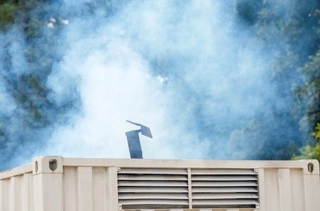
Problems Indicated by Different Smoke Colors
During operation, the color of the smoke emitted by a diesel generator is an important clue for assessing its operating condition. By observing the smoke color, we can make a preliminary judgment about potential problems. Next, we will examine in detail the specific issues represented by different smoke colors and provide corresponding solutions.
1. Black Smoke: A Warning of Air–Fuel Ratio Imbalance
Black smoke is usually caused by poor diesel combustion due to an imbalance in the air–fuel ratio. In this case, the diesel fuel is not fully burned, and some carbon particles are discharged with the exhaust gas, forming thick black smoke. There are many causes of black smoke. For example, abnormal operation of the turbocharger, such as turbocharger seizure or excessive rotational resistance, can result in insufficient air intake and incomplete combustion. In addition, improper injector adjustment, incorrect fuel injection advance angle, and poor fuel quality can also lead to black smoke.
Black smoke not only affects engine performance but also increases diesel fuel consumption and easily causes carbon deposits, shortening the service life of the engine. Therefore, once continuous black smoke is observed, immediate action should be taken. You can first check whether the fuel lines and fuel supply are normal, replace the fuel filter and air filter, inspect fuel quality, and replace injectors that are damaged due to aging or contamination.
2. Blue Smoke: A Sign of Oil Burning
When you see blue smoke emitted from a diesel generator, it usually indicates that lubricating oil has entered the combustion chamber and is being burned. This condition may be caused by internal generator faults, such as scratches on the cylinder wall, poor piston sealing, or severe damage to the cylinder, allowing lubricating oil to enter the cylinder. In addition, excessive or insufficient lubricating oil may also cause blue smoke.
The appearance of blue smoke not only reduces engine power but also increases oil consumption and may lead to increased carbon deposits inside the cylinder. For generator sets with long operating hours, the sealing performance of components such as the cylinder block and pistons should be checked frequently. Once blue smoke is observed, timely maintenance should be carried out to prevent greater losses. At the same time, ensure that lubricating oil is added in the proper amount and regularly inspect its condition.
3. White Smoke: A Sign of Incomplete Combustion
White smoke is usually associated with incomplete fuel combustion. When a diesel generator emits white smoke during operation, it may indicate the presence of water in the fuel. During cold starts, especially in winter, low engine temperatures may prevent diesel fuel from effectively vaporizing and burning, resulting in milky white oil mist from the exhaust pipe. In addition, delayed fuel injection timing, poor fuel atomization, and wear of pistons and cylinders can also cause white smoke.
The presence of white smoke may affect generator performance, making it difficult to support loads and potentially reducing load capacity. Therefore, when white smoke is observed, the fuel supply should be inspected immediately to check whether water has entered the fuel system. If the problem persists, fuel polishing can be performed to remove water, and the fuel tank should be inspected for rust or holes to prevent water ingress.
Specific Fault Causes and Solutions
After understanding the issues represented by different smoke colors, we will further analyze the specific causes of these faults and provide corresponding solutions. Through the following detailed analysis and recommendations, you can more effectively diagnose and resolve diesel generator smoking problems and ensure normal equipment operation.
1. Turbocharger Failure
The turbocharger is an important component of a diesel generator. It increases engine air intake, thereby improving engine power and fuel economy. If the turbocharger does not operate properly—for example, if it becomes seized or has excessive rotational resistance—insufficient air intake will occur, resulting in incomplete combustion and black smoke. In addition, if the turbocharger is damaged and leaks oil, allowing lubricating oil to enter the intake or exhaust system, incomplete combustion may produce dense blue or black smoke, and in some cases, oil vaporization may form thick white mist.
The solution to turbocharger failure is to promptly inspect its operating condition. If seizure or excessive resistance is detected, timely repair or replacement is required. At the same time, ensure that the turbocharger’s sealing performance is good to prevent oil leakage into the intake or exhaust system.
2. Injector and Injection Pump Faults
Injectors and injection pumps are core components of the diesel generator fuel system. They are responsible for injecting fuel into the cylinder in an appropriate atomized state to achieve good combustion. If issues such as improper injector adjustment, incorrect injection advance angle, or excessive wear of the pressure-reducing ring of the injection pump delivery valve occur, fuel combustion will be incomplete, resulting in black or white smoke.
The solution is to regularly inspect and adjust the operating condition of the injectors and injection pump. If injectors are found to be worn, damaged, or fatigued, they should be replaced promptly. At the same time, ensure correct injection timing and appropriate fuel delivery timing so that fuel can fully mix with air and achieve proper combustion.
3. Air Filter and Muffler Faults
Air filters and mufflers are also important components of diesel generators. If the air filter element is excessively clogged with dust, air intake will be insufficient, leading to incomplete combustion and black smoke. If the muffler is corroded or has excessive carbon deposits or oil contamination, exhaust flow will be restricted, affecting engine performance.
The solution is to regularly inspect and clean the air filter and muffler. If excessive dust accumulation is found on the air filter element, it should be replaced promptly. The muffler should also be cleaned regularly to remove rust, carbon deposits, and oil contamination to ensure smooth exhaust discharge.
4. Internal Engine Wear and Damage
Internal engine wear and damage are also important causes of diesel generator smoking. For example, excessive wear of cylinder liners and piston rings, incorrect piston ring installation, or loss of elasticity can lead to cylinder air leakage, affecting combustion and producing black or white smoke. In addition, issues such as insufficient valve clearance, valve burning, and carbon buildup can cause poor cylinder sealing and affect engine performance.
The solution is to regularly inspect internal engine components and promptly repair worn or damaged parts. If piston rings are excessively worn or have lost elasticity, they should be replaced in time. At the same time, ensure proper valve clearance and good valve sealing to guarantee normal engine operation.
Preventive Measures and Maintenance Recommendations
After understanding the specific causes and solutions for diesel generator smoking problems, it is also necessary to master preventive measures and maintenance recommendations to reduce failures, extend service life, and ensure that the equipment remains in good operating condition.
1. Regular Inspection and Maintenance
Regular inspection and maintenance are key to ensuring normal diesel generator operation. It is recommended to regularly inspect the operating condition of the fuel system, air filter, muffler, injectors, and injection pump, and promptly identify and resolve potential problems. At the same time, fuel filters, air filters, and oil filters should be replaced regularly to ensure fuel, air, and oil quality.
2. Use High-Quality Fuel and Lubricating Oil
Using high-quality fuel and lubricating oil can effectively reduce diesel generator smoking problems. High-quality fuel burns more completely and reduces carbon buildup, while high-quality lubricating oil provides better lubrication for internal engine components and reduces wear. Therefore, it is recommended to select fuels and lubricating oils that meet relevant standards and ensure their quality.
3. Correct Operation and Use
Correct operation and use of diesel generators are also very important. During startup, ensure sufficient engine preheating to avoid white smoke during cold starts. During operation, avoid prolonged overload operation to reduce engine stress. In addition, keep the engine clean to prevent dust and debris from entering internal components.
Summary
Diesel generator smoking is a relatively common issue, but with proper diagnosis and handling, most problems can be resolved. Different smoke colors represent different issues: black smoke is usually caused by poor diesel combustion due to an air–fuel ratio imbalance, blue smoke indicates that lubricating oil has entered the combustion chamber and is being burned, and white smoke indicates that fuel is not burning properly. By understanding these smoke colors and their meanings, you can quickly identify the root causes and take effective corrective measures.
In resolving smoking issues, regular inspection and maintenance are critical. You should routinely check the operating condition of the fuel system, air filter, muffler, injectors, and injection pump, and promptly address potential problems. At the same time, use high-quality fuel and lubricating oil and operate the diesel generator correctly to ensure normal and efficient operation.
In conclusion, diesel generator smoking is not something to fear. As long as it is correctly diagnosed and handled, your generator can maintain good performance. We hope this article provides useful reference and assistance, helping you better understand and resolve diesel generator smoking issues.
Send your message to this supplier
Related Articles from the Supplier
Related Articles from China Manufacturers

smoke alarm detection will save your live
- Aug 03, 2016

Smoke alarms detector protect your life
- Nov 09, 2016
Addressing White Smoke Issues in Wheeled Excavators
- Dec 29, 2023
Reasons for Excavator Emitting Blue Smoke
- May 14, 2024
Analysis of Diesel Generator Exhaust Smoke
- Mar 26, 2024
Related Products Mentioned in the Article

Supplier Website
Source: https://www.chinageneratorsets.com/news/smoke-from-diesel-generator-causes-hazards-solutions.html