
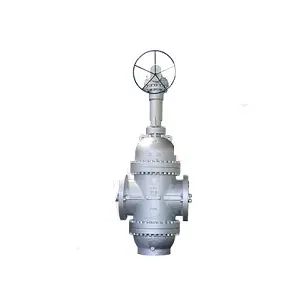
Non-rising Stem Slab Gate Valve, API 6D, NPS 2-48 Inch
Key Specifications / Features
Detail Information
Design standard: API 6D
Body material: Carbon steel, Stainless steel, duplex stainless steel, Alloy steel, Nickel alloy
Pressure range: Class 150-2500 LB
Nominal diameter: NPS 2-48 Inch
Mode of operation: Hand wheel, Gear box, Electric, Pneumatic, hydraulic device, Pneumatic-hydraulic device
End connection: RF, RTJ, BW
Stem: Non-rising Stem
Features:
1. Operating torque is smaller than normal gate valve
2. Double block and bleed seat design
3. Bidirectional seals, no limitation on the flow direction
4. When valve is in full open position, seat surfaces are outside flow stream that always in full contact with gate that can protect seat surfaces, and suitable for pigging pipeline
5. Non-rising stem design can be chosen
6. Spring loaded packing can be chosen
7. Normally open type or normally close type with through conduit design
8. Non through conduit design is also available as per customer request
9. Low emission packing can be chosen according to ISO 15848 requirements
10. Stem extended design can be chosen
Send your message to this supplier
FAQs
What is a Non-Rising Stem Gate Valve?
A valve where the stem does not move vertically but rotates internally to raise or lower the gate. This design is ideal for installations with limited vertical space.
How Does a Non-Rising Stem Gate Valve Work?
The handwheel turns the stem, which in turn moves the gate up or down inside the valve body without changing the external height of the stem.
How Does a Rising Stem Gate Valve Work?
The handwheel lifts the stem and gate together, providing a visual indication of whether the valve is open or closed.
Which Valve Should I Choose?
Use a rising stem valve for above-ground applications where visibility and ease of maintenance are important.
Use a non-rising stem valve for underground or space-limited installations.
Conclusion
The choice between rising stem and non-rising stem gate valves depends on your specific application needs. For clear valve status indication and easy maintenance, go with a rising stem valve. For compact installations, a non-rising stem valve is the better option.
Similar Products

Related Searches
Products you might also like



XIAMEN LANDEE INDUSTRIES CO., LTD.
- https://www.landee.cn/
- Address: NO. 321 JIAHE ROAD, XIAMEN, P.R.CHINA 361012
- Phone: 86-592-5204188
- Business Type: Trading , Manufacturer
Source: https://www.landeevalve.com/non-rising-stem-slab-gate-valve-api-6d-nps-2-48-inch.html