
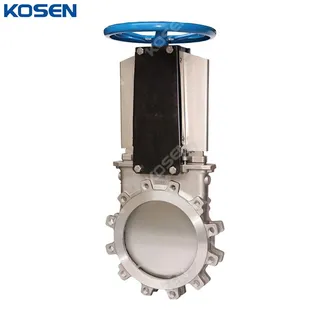
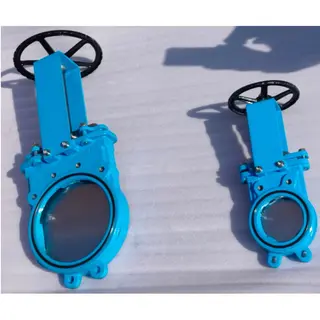
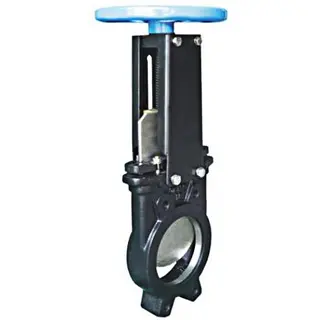
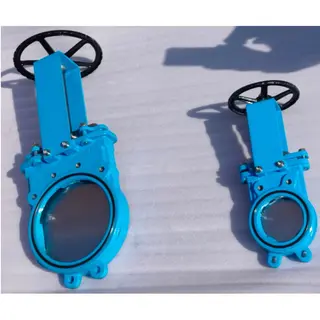
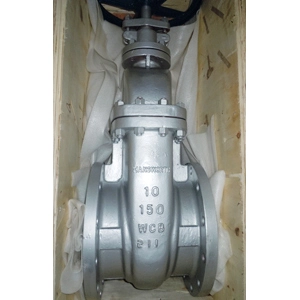
Non-rising Stem Knife Gate Valves, A351 CF8, DN250, PN10, Lug
Key Specifications / Features
Detail Information
Product Name: Non-rising Stem Knife Gate Valve
Type: Unidirectional Knife Gate Valve
Body Material: ASTM A351 CF8
Size: DN250, 10 Inch
Pressure: PN10, Class 150 LB
End Connection: Lug
Operation: Handwheel
The manual knife gate valve is a unidirectional wafer knife edge valve designed for on-off operation in industrial pipelines. Its body and seat structure prevent clogging during shutoff, making it ideal for handling media with fine particles. The beveled knife edge allows the gate to cut through thick media with ease. The valve is available in various configurations to suit different working conditions, including non-rising stem, wafer, lugged, pneumatic, electric, manual, and bevel gear knife gate valves.
Technical Specification
» Structure: Bonneted Knife Gate Valve
» Nominal Diameter: NPS 2-24 Inch (DN50-DN600)
» Design Pressure: PN10, PN16, Class 150 LB
» Max Working Pressure:
DN50 to DN250: 10 bar
DN300 to DN450: 7 bar
DN500 to DN600: 4 bar
» Body Material: Ductile Iron, Carbon Steel, Stainless Steel, Special Alloys, etc.
» Disc Material: Stainless Steel Chrome Plated, Special Alloys, etc.
» Seat Material: Stainless Steel + STL, EPDM (120°C), Viton (200°C), PTFE (200°C), NBR (80°C)
» Flange Standard: GB/T 9113.1, JB/T 79.1, HG 20592, ASME B16.5, EN 1092-1
» Face to Face: MSS SP-81
» Applications: Pulp & Paper, Water Treatment, Beverage & Food, Fine Chemicals, Power Plants, Steel Industry, etc.
» Temperature Range: -29°C to +538°C
Product Features
» High flow capacity with minimal load loss. The gate features rounded edges, which prolong the working life of the rings and packing.
» Directional arrow on the body indicates the correct mounting position.
» Equipped with a protector tube, and interchangeable drives between handwheel and pneumatic actuator.
» Coated with epoxy paint for corrosion protection.
» Recommended for water with up to 5% concentration of solid particles.
Send your message to this supplier
FAQs
What is a Non-Rising Stem Gate Valve?
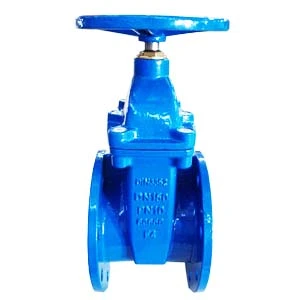
A valve where the stem does not move vertically but rotates internally to raise or lower the gate. This design is ideal for installations with limited vertical space.
How Does a Non-Rising Stem Gate Valve Work?
The handwheel turns the stem, which in turn moves the gate up or down inside the valve body without changing the external height of the stem.
How Does a Rising Stem Gate Valve Work?
The handwheel lifts the stem and gate together, providing a visual indication of whether the valve is open or closed.
Which Valve Should I Choose?
Use a rising stem valve for above-ground applications where visibility and ease of maintenance are important.
Use a non-rising stem valve for underground or space-limited installations.
Conclusion
The choice between rising stem and non-rising stem gate valves depends on your specific application needs. For clear valve status indication and easy maintenance, go with a rising stem valve. For compact installations, a non-rising stem valve is the better option.
Similar Products

Related Searches
Products you might also like



Zhejiang Kosen Valve Co., Ltd.
- https://www.kosenvalve.com/
- Address: Dongou Industrial Zone, Oubei, Wenzhou, Zhejiang, China
- Phone: 86 577 5798 7171
- Business Type: Industry & Trading , Manufacturer
Source: https://www.kosenvalve.com/non-rising-stem-knife-gate-valves-a351-cf8-dn250-pn10-lug.html